If your #app or #website forces your #customers to become an IT analyst to get logged in, you have #failed. Do you realize what that does to your #brand?


If your #app or #website forces your #customers to become an IT analyst to get logged in, you have #failed. Do you realize what that does to your #brand?
 For businesses new to digital marketing, these steps may feel huge to begin with, but once you get the hang of it, it will seem as natural as wearing a seatbelt in a car.
Now is the time, more than ever, to master your digital marketing strategy to get your business in front of more eyes. But strap yourself in for a journey rather than a two-stop trip—digital marketing is not a one-off effort, but rather an ongoing objective that needs daily monitoring.
 Making a purchase is 85% emotional and 15% logical – this article breaks down how you can use content marketing to tap into your customers’ emotions.
Emotions are an integral part of our everyday life. So if you have chosen the work as a content marketer you need to know how to discover these emotions, and uncover their raw ingredients. Embrace them, dig deeper and offer a way out the other side.
We are always trying to understand why some content goes viral and rises to the top – and some flops. Up until now we have focused on the content itself – optimizing it for search and sharing, then desperately hoping it will get some attention.
But what about your readers’ emotional needs? The sense of belonging, ego, self-expression and obligation. There are ways to “tap” into these emotions and they should be a part of every content marketing strategy.
You have about 2 seconds to get people’s attention – that’s your first couple of sentences. My hope, for example, is that you were drawn in by my first sentence and lured down the page. Now, the rest of my job is to engage you, to continue to feed your emotions, and move you along in two ways:
— Read on www.jeffbullas.com/tap-emotions-boost-content-marketing/

By Robert Leslie , Noah Lewis , and Claire Price
Until COVID-19 hit, the global cruise industry was on course for a record-breaking year. But major coronavirus outbreaks on board ships cost lives, jobs, and damaged the reputation of the fastest-growing sector of the travel industry.

By Jade Scipioni
At 73, James Patterson has sold more than 425 million copies of his 200 novels globally, making him one of the highest paid authors in the world.
Patterson had annual earnings topping more than $80 million between June 2019 to June 2020 and sold nearly 5 million in books in the U.S. during that time, according to Forbes.
In July, Patterson signed a multi-project deal with Amazon’s Audible for an undisclosed amount, with his first Audible Original, “The Coldest Case” out Thursday.
“I do not work for a living, I play for a living. I love doing it,” Patterson tells CNBC Make It.
But Patterson’s road to success didn’t happen overnight. He started writing as a side hustle and he faced a lot of rejection before getting his first book published.
In Dan Roth’s dream world, members of LinkedIn, where he has served as editor in chief since 2011, would habitually read the LinkedIn Daily Rundown with their morning cup of coffee.
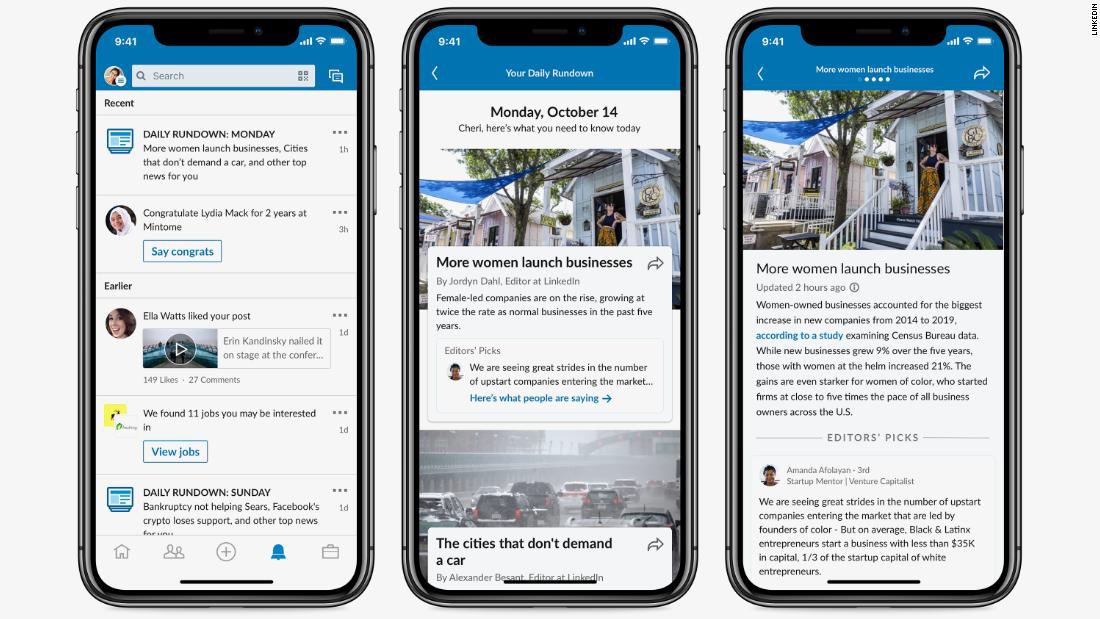
They’d then turn their attention to the site’s podcast or newsletter during their commute to work. When they get to their desks, they’d open LinkedIn.com on their browsers, where they can read from a carefully curated feed of professional and business news throughout their work day. Users who felt inspired by the content would share links on their own timeline. They’d check their notifications tab to see if others have engaged with the content they share.
Who knows? They might even talk about one of LinkedIn’s articles at their next staff meeting.
This is Roth’s aspiration for LinkedIn’s 645 million members and for workers who have yet to use the site. He envisions LinkedIn as the perfect “utility” for professionals.
— Read on amp.cnn.com/cnn/2019/10/23/media/linkedin-journalists/index.html
Obinwanne Okeke was supposed to be a rags-to-riches Nigerian success story. Then the feds followed the money.
There he was, smiling on the cover of Forbes Africa magazine, dollar bills raining like confetti. It was June 2016, and Obinwanne Okeke, then 28, was on top of the world; he had just landed a coveted spot on the magazine’s prestigious 30 under 30 list of African entrepreneurs. In the article, he was one of many whiz kids described as “Africa’s bright young things.”

The 17th child of a polygamous father whose mother was the fourth wife, Okeke’s father died when he was 16, and his mother, a teacher, worked multiple jobs to put him and his siblings through school. Growing up in Ukpor, a village in southeastern Nigeria, was tough, and luxuries like sneakers or a Game Boy were hard to come by, he said in a 2018 BBC interview.
Turns out, Okeke had been involved in a string of sophisticated online scams since at least 2015 — including when he was gracing that glossy Forbes Africa cover. He was arrested at Dulles International Airport, Virginia, on August 6, 2019, for defrauding a company of nearly $11 million. He pleaded guilty to conspiracy to commit wire fraud on June 18, 2020, and now faces up to 20 years in prison at his sentencing in October.
https://restofworld.org/2020/how-a-forbes-cover-star-stole-millions/
 Brownie Bytes