Video by R. Michael Brown – Lake Huntley, Lake Placid, FL
Our home has finally returned to Jurassic Park after the hurricane in the Summer of 2024.
Most of the birds disappeared for a long time. They’re finally coming back.
Video by R. Michael Brown – Lake Huntley, Lake Placid, FL
Our home has finally returned to Jurassic Park after the hurricane in the Summer of 2024.
Most of the birds disappeared for a long time. They’re finally coming back.
So when your driverless car cuts someone off, will the road rage be directed at you… the passenger?
| Today’s top story, from reporter Anabelle Nicoud, IBM Think Newsletter If you’ve ridden in a Waymo recently and found your driverless taxi to be more assertive and, dare we say, more human on the road, you’re not imagining things. The Alphabet-owned company, which has been navigating passengers in San Francisco, Austin, Phoenix and LA, is now exhibiting very human-like traits, according to the San Francisco Chronicle. No drunk driving or road rage, of course, but under the right circumstances, that white Jaguar might indulge in a honk or two. As it turns out, a more commanding Waymo yielded safer rides, the Chronicle reported. “Being an assertive driver means that you’re more predictable, that you blend into the environment, that you do things that you expect other humans on the road to do,” David Margines, Waymo’s Director of Product Management, said in an interview with the paper. “It’s a very interesting kind of paradox here: we need less perfection to really fit social norms,” said Kaoutar El Maghraoui, a Principal Research Scientist at IBM, in this week’s Mixture of Experts. According to the company’s data, Waymo is safer than human drivers. And yet, part of being so might just be by mimicking our bad, albeit predictable, habits, favoring social compatibility over algorithmic perfection. Uncanny valley, you say? Technically, Waymos could be enjoying more free-form decision-making, thinks Gabe Goodhart, Chief Architect of AI Open Innovation at IBM. He likened older, rule-based vehicles to the chatbots of yore—pre-generative AI systems beholden to clunky decision trees. But as autonomous vehicles adopt more human-like behavior—and choice—drivers may feel more comfortable because the cars better adhere to their expectations. “If we start applying this more flexible way of adapting [the car’s] behavior to the environment … it may make the vehicle fit in a whole lot better,” he said on the podcast. As more driverless cars hit the streets of American cities—from Zoox to Tesla’s newly launched robotaxis—it will be fascinating to watch how they adapt to robot driving. Could it pave the way to more collaboration between tech giants? “A lot of open-source consortiums have started because of similar problems,” noted Ann Funai, CIO and VP of Business Platform Transformation at IBM. “There’s this area where you need common understanding, common knowledge, common engagement. Maybe that means agreeing to use the same open-source component for training, so we’re not all crashing into each other.” Listen to the full episode on YouTube, Spotify and Apple Podcasts. |

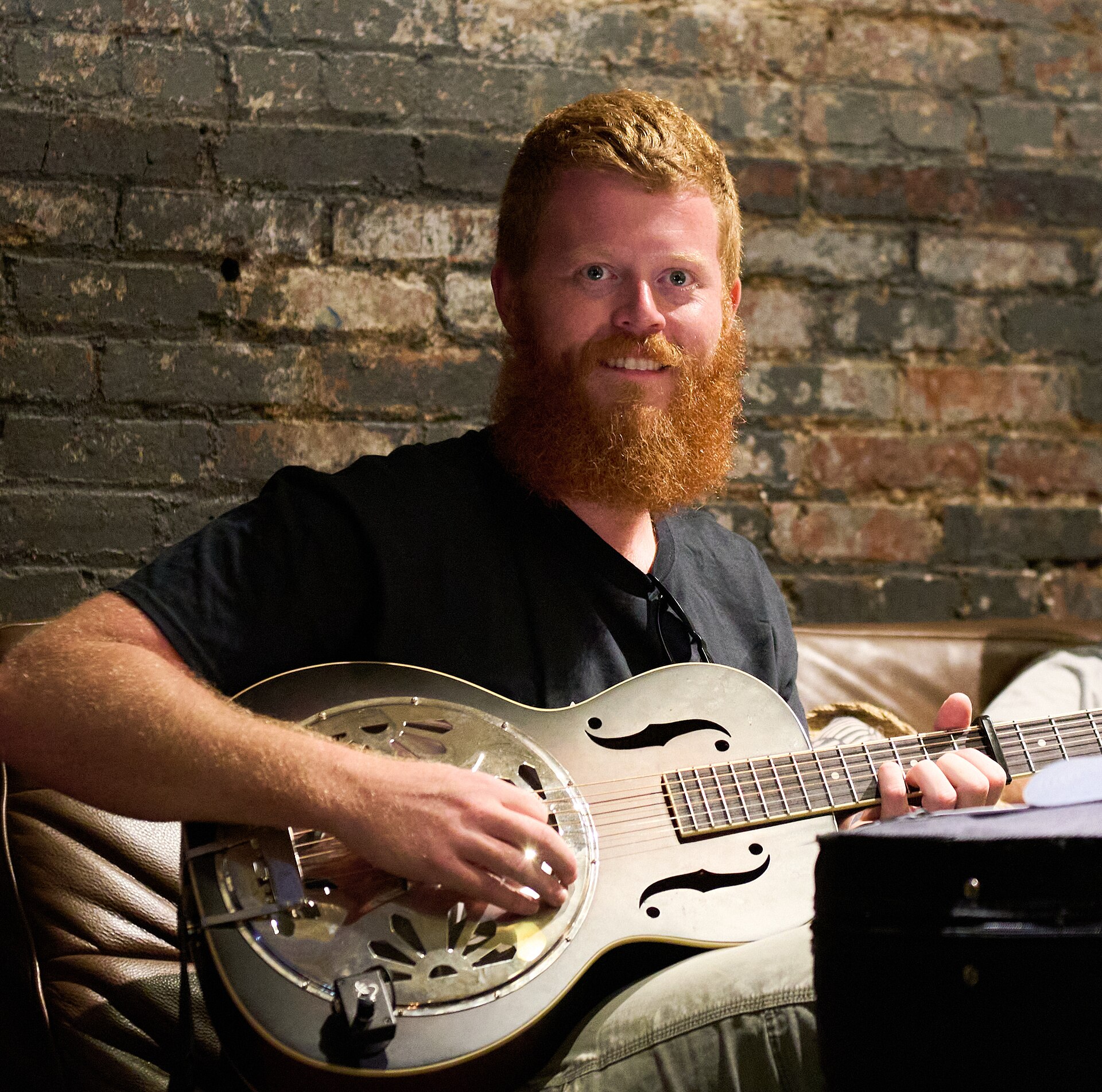
Two years ago, an unknown artist named Oliver Anthony topped the Billboard Hot 100 with the viral country-folk tune “Rich Men North of Richmond.”
Whether you loved or hated it, the song was impossible to escape: I’ve been sellin’ my soul, workin’ all day / Overtime hours for bullshit pay.
The polarizing working-class anthem made Anthony (born Christopher Lunsford) the first artist to hit No. 1 with no prior chart history.
Since then, the 32-year-old Virginian released his debut album, Hymnal of a Troubled Man’s Mind, and then promptly quit the music industry—but apparently not before raking in some serious cash.
SEE MORE [American Songwriter]
Brownie Bytes: He even booked his first ever live performance, 2 months before launching his hit, and was paid $200 to play for 2.5 hours at a farmers market. His hit went viral and 12,000+ showed up at that first live performance.
Alright, America, buckle up! It’s launch day for Made in the USA Today, the podcast and website that’s gonna light a fire under this country’s manufacturing comeback.
I’m here for R. Michael Brown, your host, reporter, and your guide through the wild, patriotic ride that is the “Made in the USA” movement. We’re not here to sugarcoat anything—we’re diving into the good, the bad, and the downright infuriating.
So, let’s get to it!
Picture this: it’s 2025, and America’s waking up. The “Made in the USA” label is back, and it’s hotter than a summer barbecue.
People are fed up with cheap foreign junk, and they’re demanding American-made goods that scream quality, pride, AND JOBS. But, hold the phone—this isn’t some feel-good story. It’s a gritty, complicated fight, and we’re gonna break it down like nobody else.
First up, reshoring. That’s the buzzword, and it’s real. The eggheads at the National Institute of Standards and Technology—dropped a truth bomb in February 2025: the COVID-19 disaster showed us our supply chains were a house of cards.
Remember those empty shelves? Yeah, never again.
So, companies are bringing manufacturing back to the good ol’ U.S.A., and with a new administration turning up the heat, small and medium-sized businesses are going all-in. They’re using cool tech like 3D printing and smart manufacturing to keep up.
Sounds awesome, right? Well, not so fast. This stuff costs a fortune to set up, and you’ve gotta retrain workers to run the new toys. It’s like trying to rebuild a muscle car from scratch—doable, but it’s gonna take time.
Now, let’s talk about you, the American folks. You’re the ones driving this bus.
I’ve been lurking on X, and the vibe is clear: you’re pumped for American-made products that last longer than a TikTok trend. You’re waving the flag, and it’s beautiful.
Take the Dobyns Family’s “America First” T-shirt—100% U.S.-grown cotton, priced at $17.76 cents – because, that’s the most patriotic price ever – 1776. It’s like wrapping yourself in the Declaration of Independence.
But here’s the kicker: the Federal Trade Commission says “Made in USA” means all – or virtually all – of a product’s gotta be American like Dobyns. Sounds simple, but it’s a hot mess.
CarEdge says 117 car models are assembled here in 2025, but they’re still grabbing parts from Canada and Mexico. Are we making cars or playing Legos from around the world?
On the corporate side, it’s a tale of two Americas….
Aggregated by R. Michael Brown, Writer, AI Editor

Lurch was a fictional character created by American cartoonist Charles Addams as a butler to the Addams Family. In the original television series, Lurch was played by Ted Cassidy.
He is a 6 ft. 9 in. tall, shambling, gloomy butler. In the original Addams Family television series, Lurch has a deep and resonant voice. Although fully capable of normal speech, Lurch often communicates via simple inarticulate moans, which, much like the dialogue of Cousin Itt, his employers have no trouble understanding.
Like any butler, Lurch tries to help around the house, but occasionally his great size and strength cause trouble. He clearly takes pride in his work and is willing to do even the most arduous task.
His character often demonstrates signs of frustration towards his employers; however, his continued presence also suggests loyalty. As a result, he appears to be one of the family.
The family summons him with an ever-present bell pull (in the form of a hangman’s noose). When pulled, it produces a loud gong noise that shakes the house, to which Lurch instantly appears and responds, “You… rang?”, even if wide-angle shots reveal that he was clearly nowhere in the vicinity before; on a few occasions Lurch arrives even before the bell pull is tugged.
Much of Lurch’s history, including his first name and the nature of his relationship to any other Addamses, was originally unspecified. “Lurch” was revealed during the original TV series to be a surname, as there was a “Mother Lurch” who appeared in one episode (portrayed by Ellen Corby). She addressed Lurch as “Sonny”, which could either be a parental nickname or his actual first name. As for his father, he was mentioned twice, once in the second animated series, and in an apparent reference to his Frankenstein’s monster-like appearance, Lurch said, smiling, “He put me together.” And another time in the original series where Lurch mentions his father wanted him to be a jockey (typically short and light people) instead of a butler.
It was stated in Addams Family Reunion that Lurch is part Addams. This plays into his being a creation similar to Frankenstein’s monster. The only definite body part that is from an Addams is his heart. Lurch’s mother appears to be a physically normal, elderly woman, although she does not see anything unusual about the Addams family or their home, with the exception of Thing.

A decade before Ted Cassidy played Lurch on The Addams Family (and appeared in Star Trek, The Twilight Zone, Butch Cassidy and the Sundance Kid and other films and series) he was an Ormond Beach lifeguard who earned a double major in Speech and Drama at DeLand’s Stetson University. That’s him, second from left. Handsome fella and, by all accounts, a very nice man.
Theodore Crawford Cassidy (July 31, 1932 – January 16, 1979) was an American actor. He tended to play unusual characters in offbeat or science-fiction works, such as Star Trek and I Dream of Jeannie, and he played Lurch on The Addams Family TV series of the mid-1960s.[1][2] He also narrated the intro sequence for the 1977 live-action The Incredible Hulk TV series and provided the growls and roars for the Hulk for the first two seasons before his death. [Wikipedia]