By R. Michael Brown, Writer| Producer & Former Field Engineer
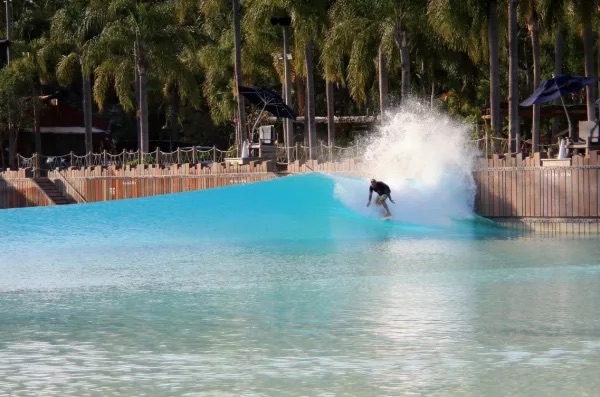
In the lake in front of the Polynesian Hotel and Village, Disney World built a wave machine on an island to pump waves toward the hotel beach for surfing.
The company I worked for was doing some geotechnical work on it and I was the only surfer in the company so they sent me out to test the waves.
When the machine worked, which wasn’t very often, it would pump out a 2 foot closeout of murky swamp water.
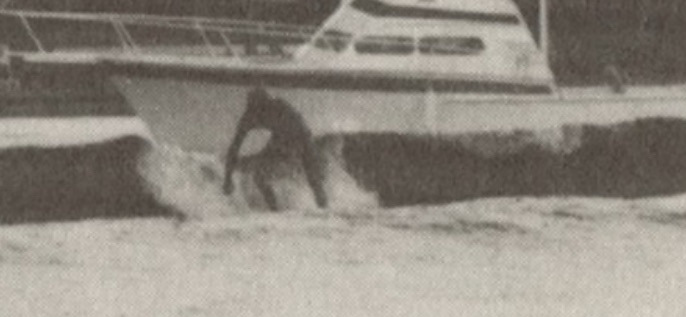
Me [my skinny self back then] OR Dick Nunis, Disney executive?
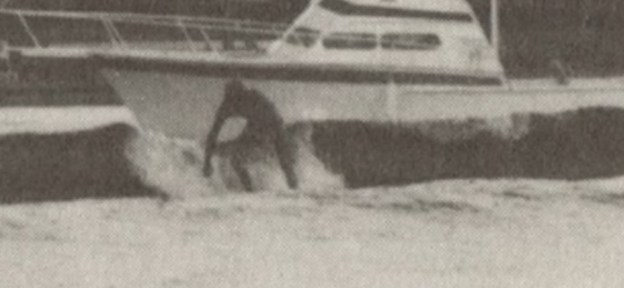
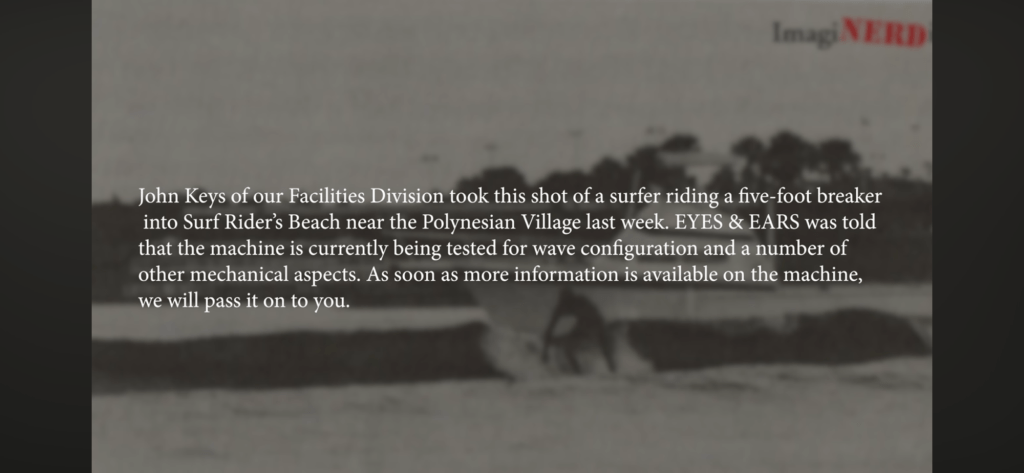
There is only one photo that I’ve found of someone surfing the wave (above). A Disney employee newsletter ran the photo and said it was Dick Nunis surfing in the photo, the Disney executive that came up with the wave machine idea and acquired the $400,000 budget to build it. Might have been him but the newsletter also said it was a 5 ft. wave. That’s a stretch LOL.
5 ft. Wave?
It wasn’t a very powerful wave but it was strong enough to ride on a longboard AND wash away the man-made fine white sand beach next to the Polynesian.
I told them they should try to use larger/heavier grain size quartz beach sand; but, that’s tan and gray and they wanted pristine white – I’m sure for the Disney attraction brand or something. Powdery white sand only comes in tiny grain sizes and is easily moved by wind and waves. Erosion was instantaneous. Common sense really.
I was just an ocean engineering college student, employed field soils engineer, and surfer, so what did I know, right? They didn’t listen or try it.
It failed.
So the ride/attraction was cancelled and scrapped.
Nunis did finally get his wave machine with Typhoon Lagoon in 1989 – But that’s another story…
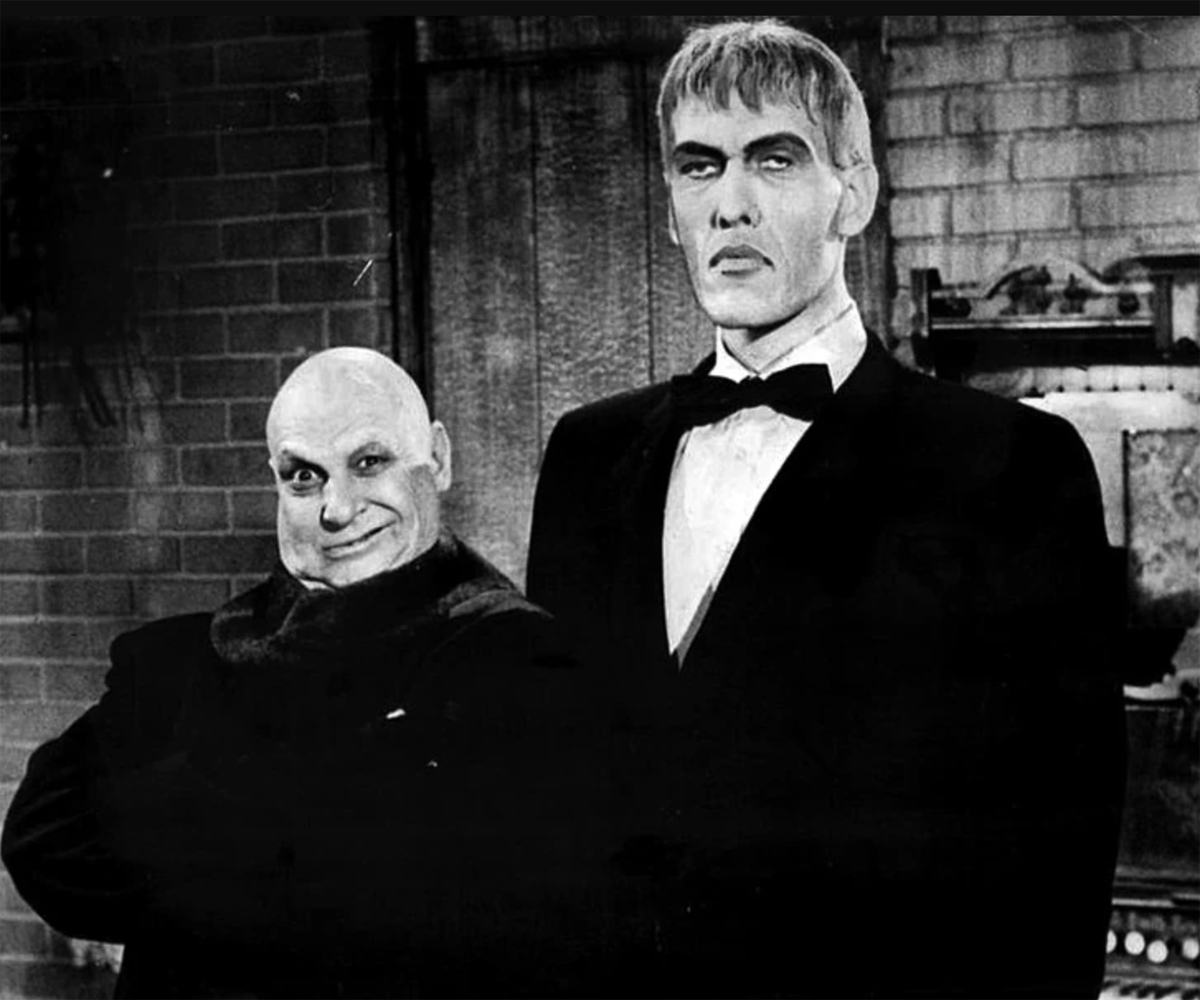
Uncle Festus and Lurch from the Addams Family TV show
Lurch was a fictional character created by American cartoonist Charles Addams as a butler to the Addams Family. In the original television series, Lurch was played by Ted Cassidy.
He is a 6 ft. 9 in. tall, shambling, gloomy butler. In the original Addams Family television series, Lurch has a deep and resonant voice. Although fully capable of normal speech, Lurch often communicates via simple inarticulate moans, which, much like the dialogue of Cousin Itt, his employers have no trouble understanding.
Like any butler, Lurch tries to help around the house, but occasionally his great size and strength cause trouble. He clearly takes pride in his work and is willing to do even the most arduous task.
His character often demonstrates signs of frustration towards his employers; however, his continued presence also suggests loyalty. As a result, he appears to be one of the family.
The family summons him with an ever-present bell pull (in the form of a hangman’s noose). When pulled, it produces a loud gong noise that shakes the house, to which Lurch instantly appears and responds, “You… rang?”, even if wide-angle shots reveal that he was clearly nowhere in the vicinity before; on a few occasions Lurch arrives even before the bell pull is tugged.
Much of Lurch’s history, including his first name and the nature of his relationship to any other Addamses, was originally unspecified. “Lurch” was revealed during the original TV series to be a surname, as there was a “Mother Lurch” who appeared in one episode (portrayed by Ellen Corby). She addressed Lurch as “Sonny”, which could either be a parental nickname or his actual first name. As for his father, he was mentioned twice, once in the second animated series, and in an apparent reference to his Frankenstein’s monster-like appearance, Lurch said, smiling, “He put me together.” And another time in the original series where Lurch mentions his father wanted him to be a jockey (typically short and light people) instead of a butler.
It was stated in Addams Family Reunion that Lurch is part Addams. This plays into his being a creation similar to Frankenstein’s monster. The only definite body part that is from an Addams is his heart. Lurch’s mother appears to be a physically normal, elderly woman, although she does not see anything unusual about the Addams family or their home, with the exception of Thing.
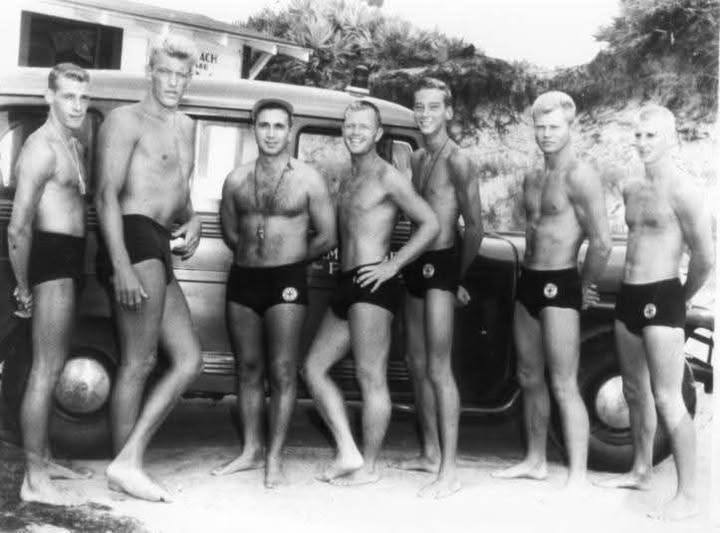
“Lurch” as a Florida ocean lifeguard in Ormond Beach
A decade before Ted Cassidy played Lurch on The Addams Family (and appeared in Star Trek, The Twilight Zone, Butch Cassidy and the Sundance Kid and other films and series) he was an Ormond Beach lifeguard who earned a double major in Speech and Drama at DeLand’s Stetson University. That’s him, second from left. Handsome fella and, by all accounts, a very nice man.
Theodore Crawford Cassidy (July 31, 1932 – January 16, 1979) was an American actor. He tended to play unusual characters in offbeat or science-fiction works, such as Star Trek and I Dream of Jeannie, and he played Lurch on The Addams Family TV series of the mid-1960s.[1][2] He also narrated the intro sequence for the 1977 live-action The Incredible Hulk TV series and provided the growls and roars for the Hulk for the first two seasons before his death. [Wikipedia]
The Sebring Community Redevelopment Agency (CRA) approved an agreement to participate in a TV show’s makeover of the downtown Circle Park Drive area with the network proposing to spend about $1 million and the CRA pitching in $1.35 million.
Downtown Circle in Sebring, Florida
Show hosts Erin and Ben Napier of Home Town Takeover has been renewed for season 3, and they will be taking their renovation expertise to Sebring. Their original and still running show is Home Town, which has eight seasons on HGTV, starting in 2016.
“Home Town Takeover” previously stopped in Wetumpka, Ala. in Season 1 and Fort Morgan, Colo. in Season 2.
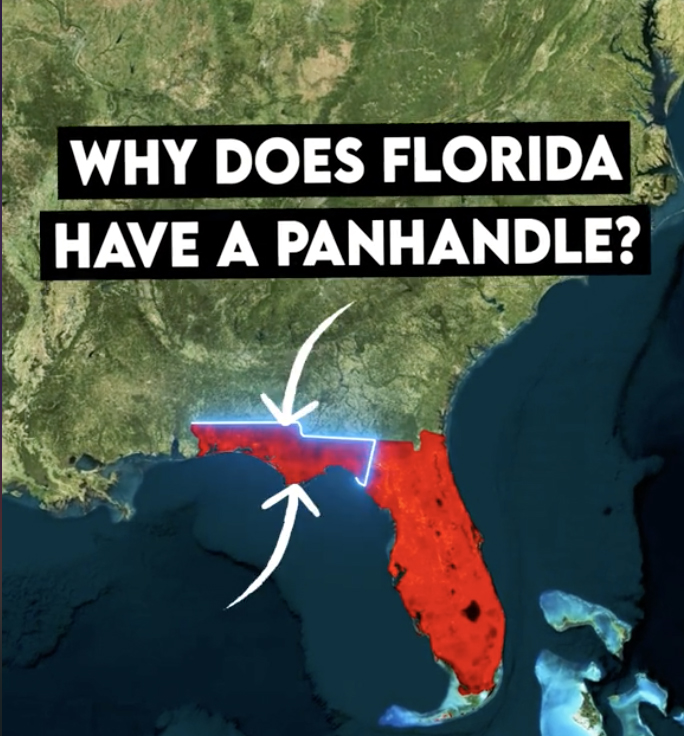
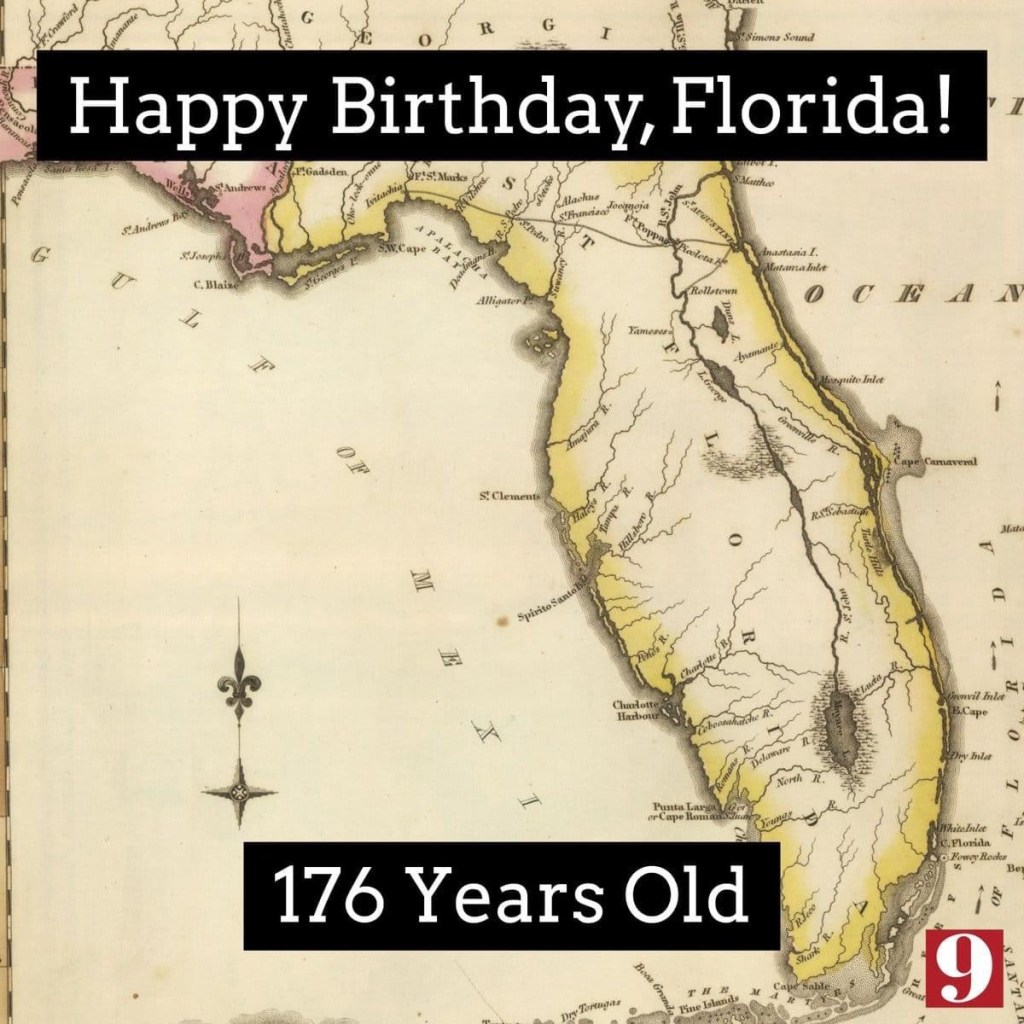
This didn’t last for long though, since this part of Western Florida would be annexed into the Mississippi Territory, and then shortly after, it would be broken up into Mississippi and Alabama.
This left Alabama with this tiny coastline, and Florida a much shorter panhandle. But even this almost became a part of Alabama.
You see, the residents of the Floridian panhandle felt more connected to Alabama rather than to the rest of the state. This was due to the “swamps and dense forests” which made it difficult to go east.
And so from 1811-1901, the Florida Panhandle tried to become a part of Alabama 11 times!
Probably the closest attempt to succeeding was in 1869, when all the West Florida counties were polled on whether or not they wanted to be annexed by Alabama. A majority 64% of the population wanted annexation but despite this, Alabama didn’t annex it.
This was because they actually had to purchase it from Florida first for $1M, but it just didn’t seem worth it to them.
All annexation attempts largely came to an end after the completion of the Pensacola and Atlantic Railroad in 1883; finally ending its isolation from the rest of the state.
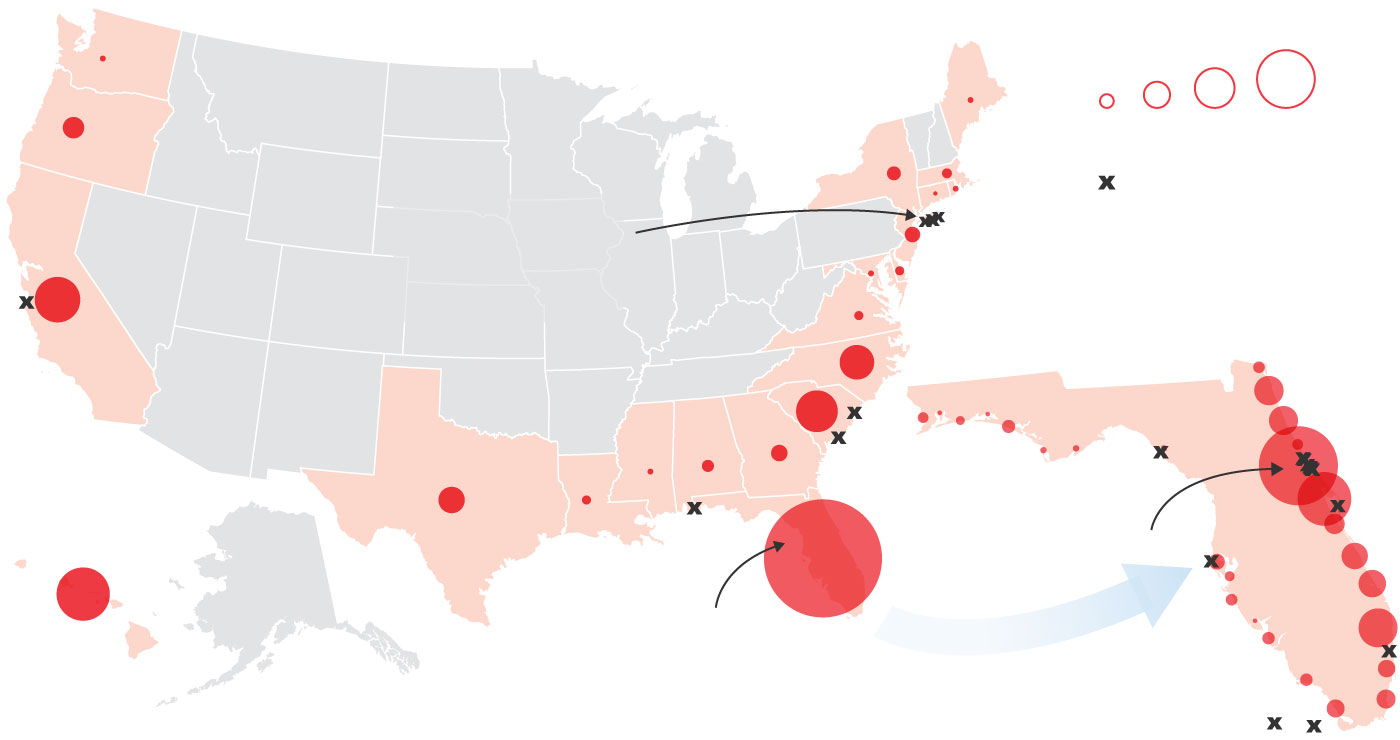
Unprovoked bites, while rare, have been raising the alarm for some beachgoers this summer
Sources: Florida Museum of Natural History (1837-2021); trackingsharks.com (2022 data from media reports)
Brownie Bytes Take: As a surfer with 40 years experience in Florida, New Smyrna Beach has the most shark bites and sharks in the surfline than anywhere else. I’ve been bumped, chased, and seen others bitten there in 3 ft. of water right along the shore. Even though the blacktip shark migration during the late Fall and Winter happens in S. Florida with 10,000 sharks per mile per day cruising near the coast, they rarely bother anyone.
– R. Michael Brown
News of shark attacks off the coast of New York’s Long Island this summer raised the alarm for many beachgoers, surfers and divers. Shark bites, although rare compared with the number of people who get into the ocean, still happen in coastal areas of the U.S.
According to Tracking Sharks, a website that specializes in reporting shark attacks and bites across the globe, there have been 28 shark attacks in the U.S. in 2022 as of Aug. 1. Two of the attacks were provoked and none was fatal.
There were 47 confirmed cases in 2021, returning to prepandemic levels, and 33 in 2020.
Unprovoked shark bites are the most common incidents, according to the Florida Museum of Natural History’s International Shark Attack Files, a global compilation of all known shark attacks. Florida leads the U.S. in shark attacks, followed by Hawaii, California and South Carolina.
The most frequent type of unprovoked bites are so-called “hit and run” attacks, the museum says. These normally happen in the surf zones as coastal shark species follow schools of fish close to shore. There, sharks can encounter swimmers and surfers—and sometimes confuse people with their usual prey. The sharks don’t return after inflicting a single bite or slash wound.
Shark attacks and deaths from shark bites are extremely rare, experts say. The yearly average of unprovoked shark bites globally is 70, resulting in about 5 deaths, data from the Florida Museum of Natural History shows.


 Brownie Bytes