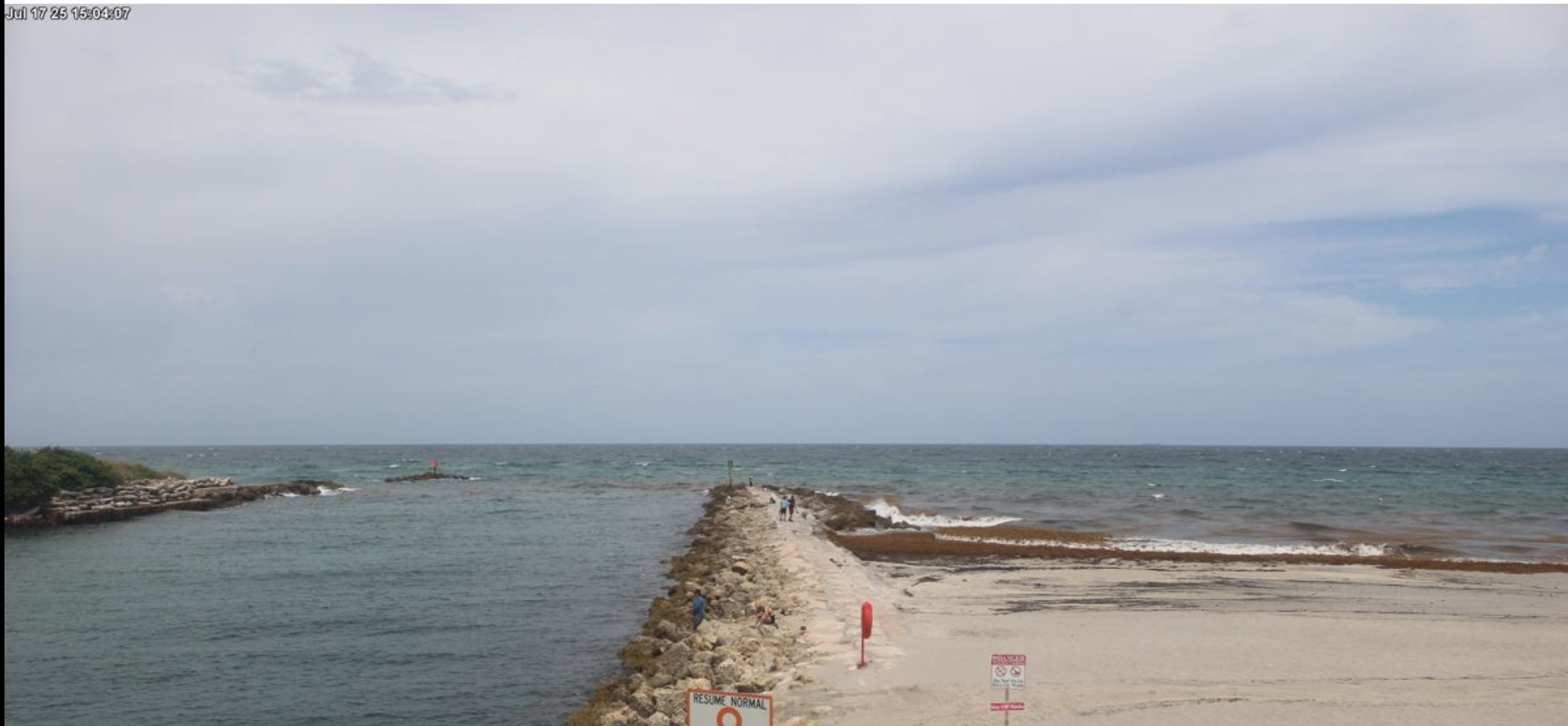
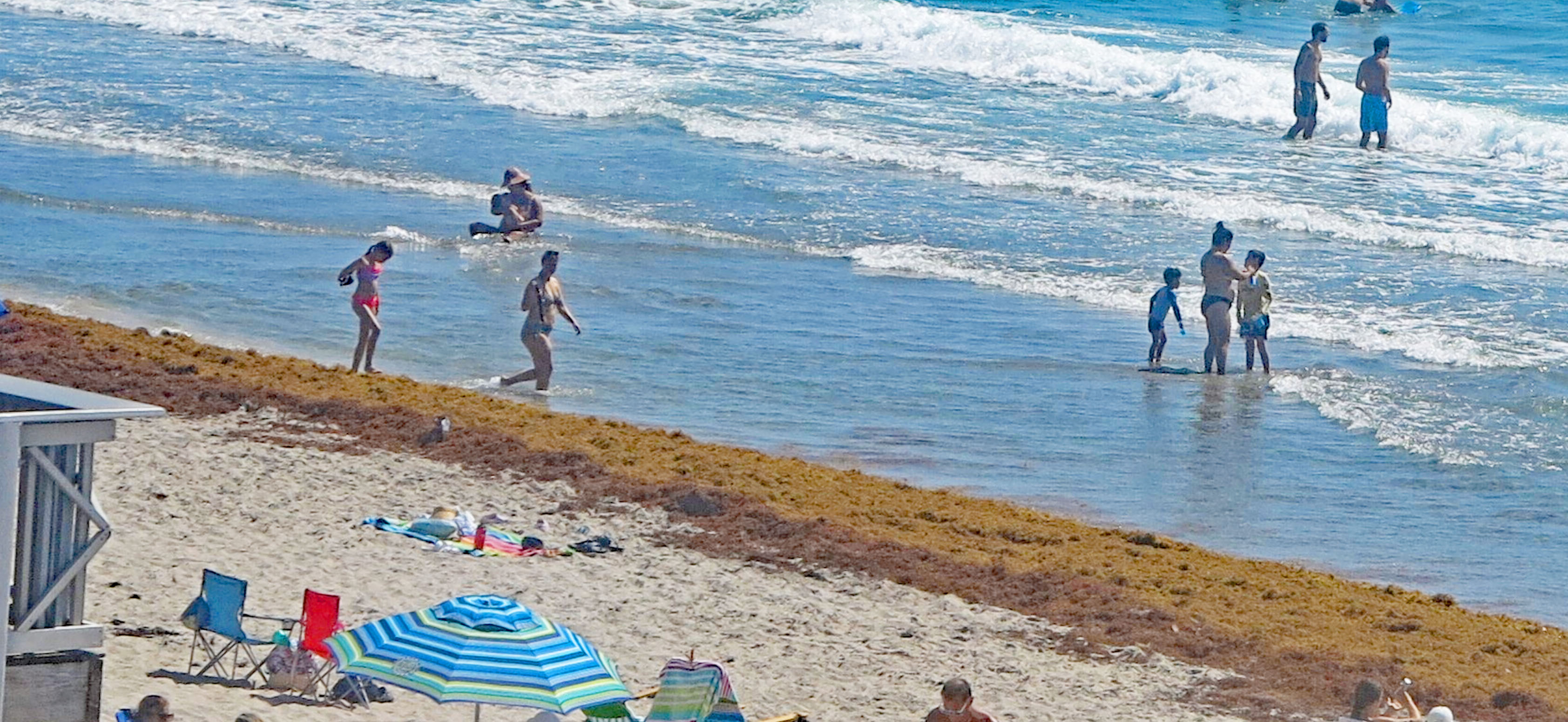
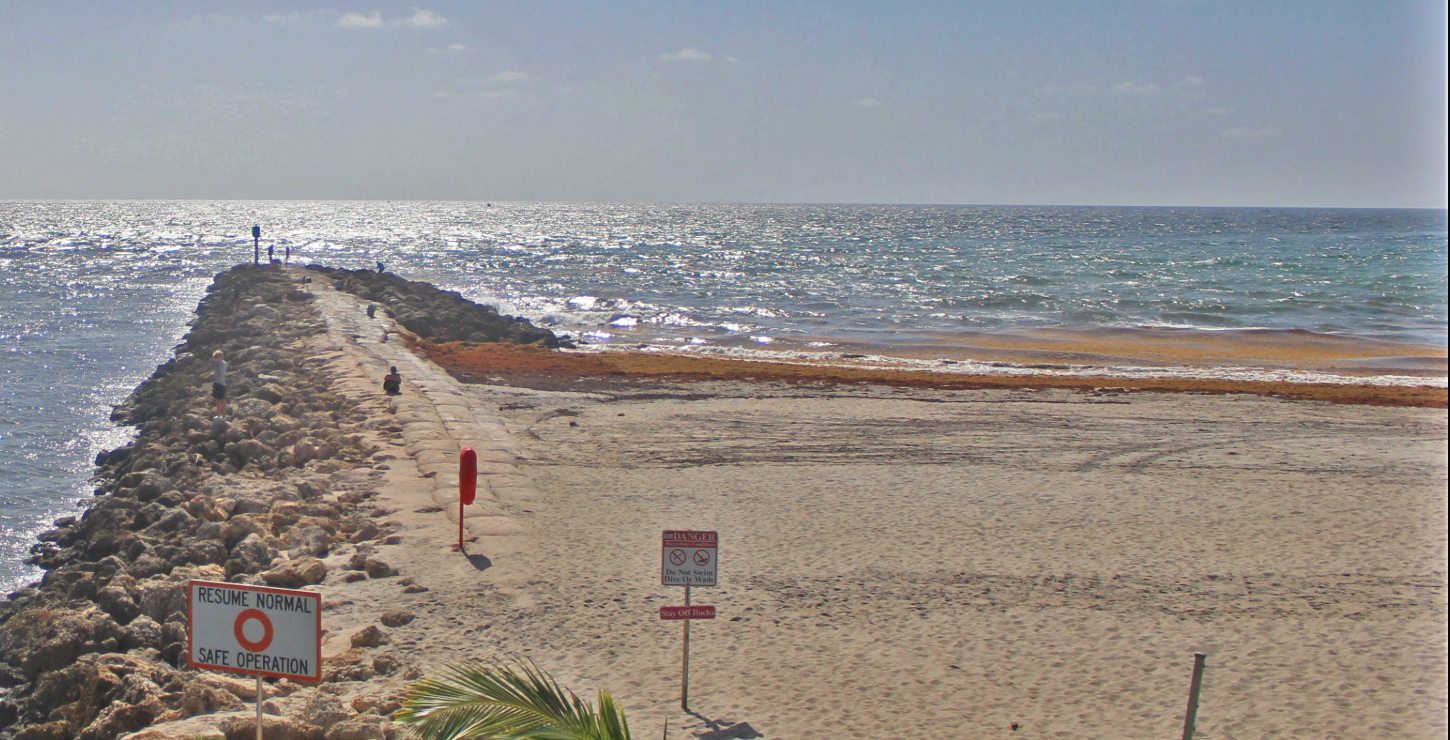
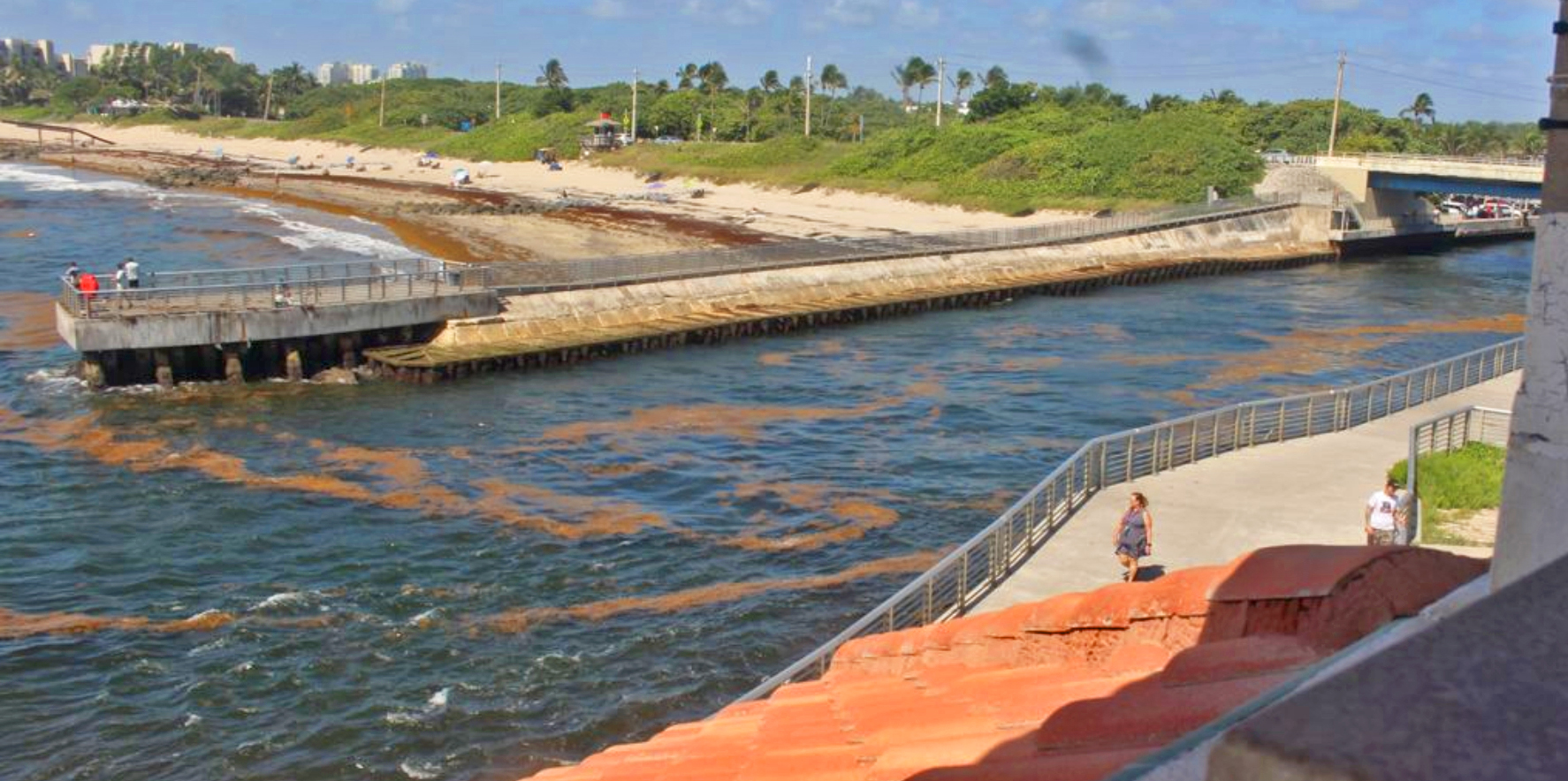
Seaweed is invading South Florida beaches again this summer. From Miami Beach to Ft. Pierce, Florida, the sargassum bloom has impacted beaches with up to shin deep stinky weed.
Click images to enlarge:
Boca Raton InletPalmetto Park Rd. Boca RatonBoca Raton InletBoynton Inlet
It’s caused by fertilizer runoff and pollution in the Atlantic Ocean and greatly impacts the Caribbean and Florida beaches. Since I reported on the first major Sargassum Seaweed bloom over 10 years ago, we’ve had a couple times that was almost this bad. Hopefully it won’t get as bad as the first:
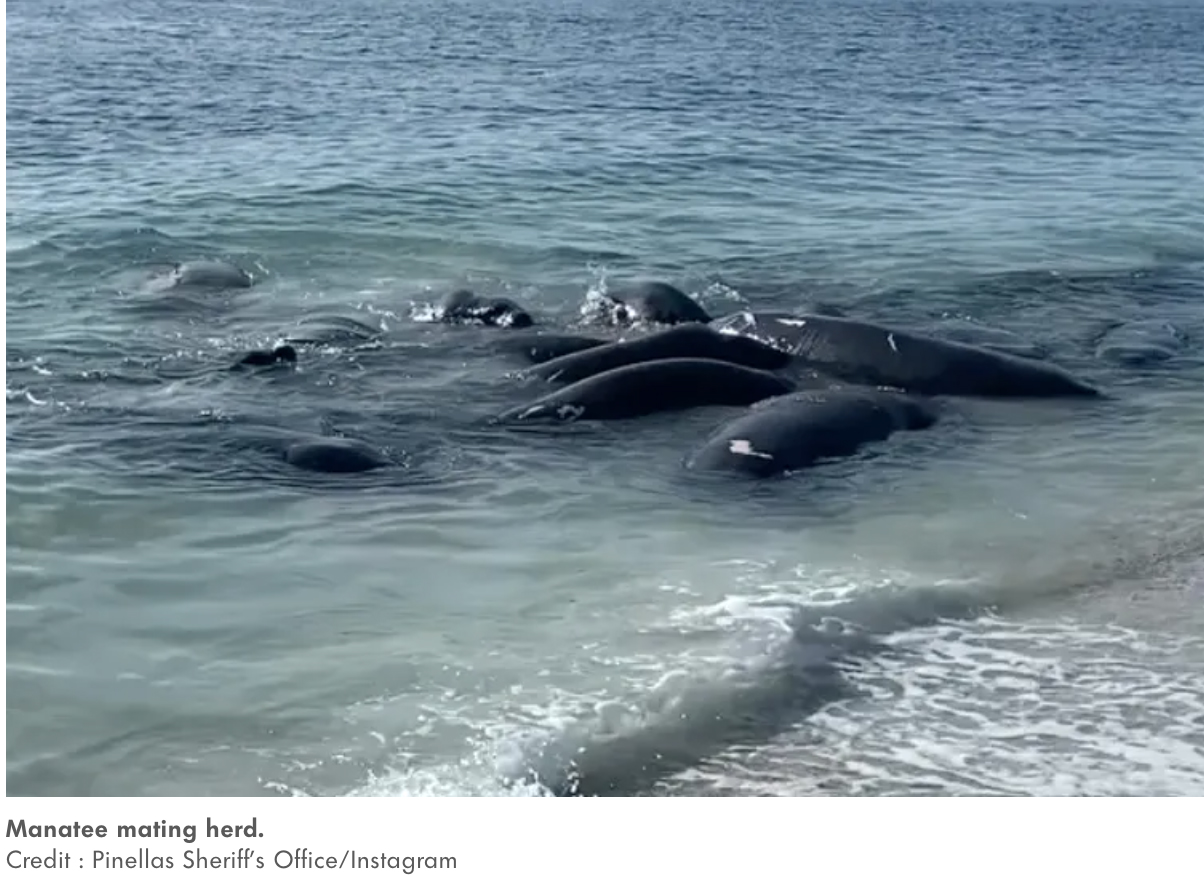
The Pinellas Sheriff’s Office shared a warning on June 15 after receiving numerous calls about groups of manatees gathering together
By Kelli Bender Published on June 18, 2025 07:30PM EDT
Manatee Mating
If you see the manatees rocking through the waves, don’t come knocking on the Pinellas Sheriff’s Office’s door.
The Florida sheriff’s office shared an unusual warning about the animals on Instagram on June 15. The post includes a video showing a clump of manatees closely gathered together on the shore of a Florida beach. At least 10 manatees swim over and near each other in the footage.
According to the post, this type of bizarre-looking manatee gathering is common in the summer, and no cause for alarm. The marine mammals are getting together for an NSFW reason, per the Pinellas Sheriff’s Office.
“If you see this … no, you didn’t,” the sheriff’s office wrote on the manatee video. “Don’t call us. They are more than fine. It’s mating season.”
Pinellas Sheriff’s Office provided more context in the caption alongside the manatee footage.
“We get calls all the time from citizens when they see this, believing the manatees are in distress. We can assure you they are more than fine,” the agency wrote, adding, “Manatees actually mate in herds like these, and often they are near the shore. They mate all throughout the year, but generally, mating herds like these are seen in the summer months.”
So far it’s not as bad as 2019 in Palm Beach County. But, it’s pretty bad. The Sargassum bloom is out of control again. This is in Ocean Ridge, Florida.
Sargassum is a seaweed that can accumulate along the shoreline in large amounts, making the shoreline inaccessible for swimming, boating, and other recreational activities. This beach seaweed overflow is happening again.
If you live near the coast and have experienced the beach seaweed overflow in the past, then you already know what to do! Be sure to check out our site for more information on this and other coastal issues!
See the feature story I did in 2019 when it was really bad in Florida, the Caribbean, and South and Central American coasts:
Unprovoked bites, while rare, have been raising the alarm for some beachgoers this summer
Sources: Florida Museum of Natural History (1837-2021); trackingsharks.com (2022 data from media reports)
Brownie Bytes Take: As a surfer with 40 years experience in Florida, New Smyrna Beach has the most shark bites and sharks in the surfline than anywhere else. I’ve been bumped, chased, and seen others bitten there in 3 ft. of water right along the shore. Even though the blacktip shark migration during the late Fall and Winter happens in S. Florida with 10,000 sharks per mile per day cruising near the coast, they rarely bother anyone.
– R. Michael Brown
News of shark attacks off the coast of New York’s Long Island this summer raised the alarm for many beachgoers, surfers and divers. Shark bites, although rare compared with the number of people who get into the ocean, still happen in coastal areas of the U.S.
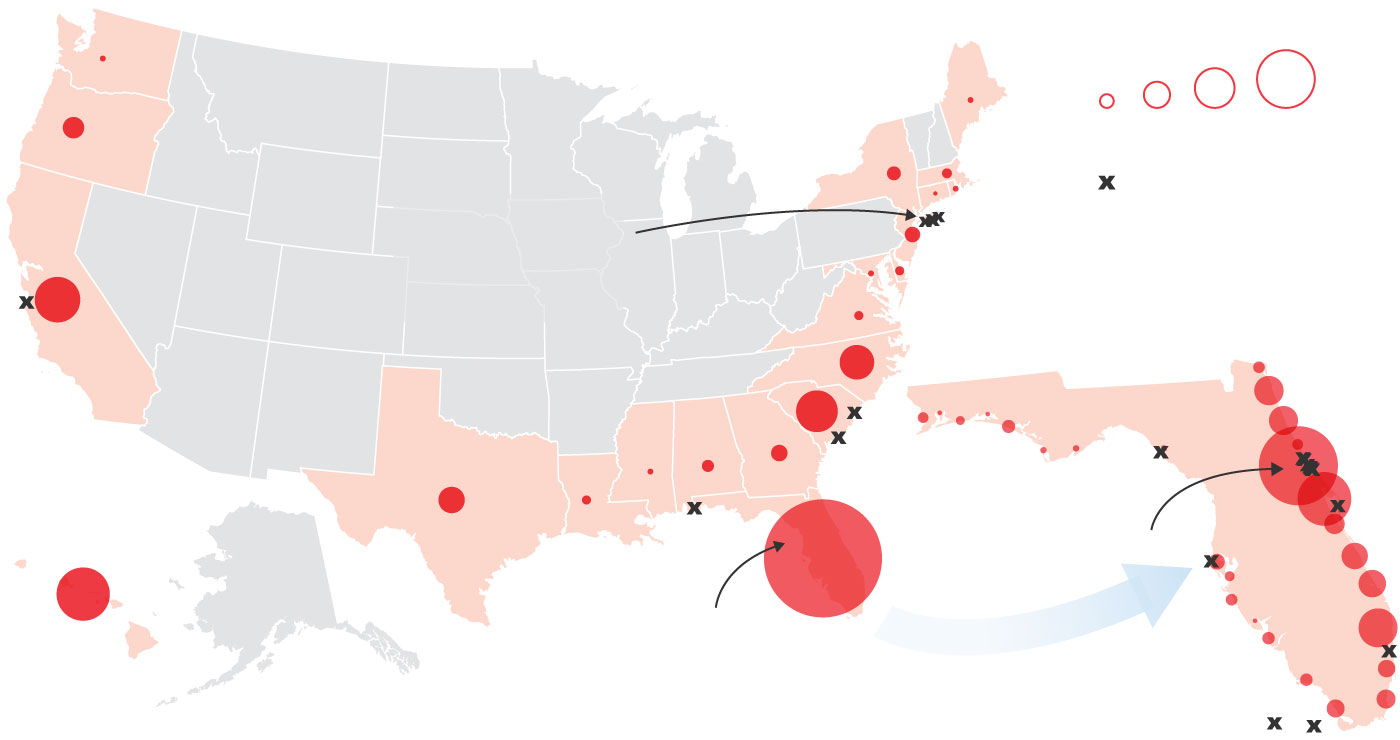
According to Tracking Sharks, a website that specializes in reporting shark attacks and bites across the globe, there have been 28 shark attacks in the U.S. in 2022 as of Aug. 1. Two of the attacks were provoked and none was fatal.
There were 47 confirmed cases in 2021, returning to prepandemic levels, and 33 in 2020.
Unprovoked shark bites are the most common incidents, according to the Florida Museum of Natural History’s International Shark Attack Files, a global compilation of all known shark attacks. Florida leads the U.S. in shark attacks, followed by Hawaii, California and South Carolina.
The most frequent type of unprovoked bites are so-called “hit and run” attacks, the museum says. These normally happen in the surf zones as coastal shark species follow schools of fish close to shore. There, sharks can encounter swimmers and surfers—and sometimes confuse people with their usual prey. The sharks don’t return after inflicting a single bite or slash wound.
Shark attacks and deaths from shark bites are extremely rare, experts say. The yearly average of unprovoked shark bites globally is 70, resulting in about 5 deaths, data from the Florida Museum of Natural History shows.
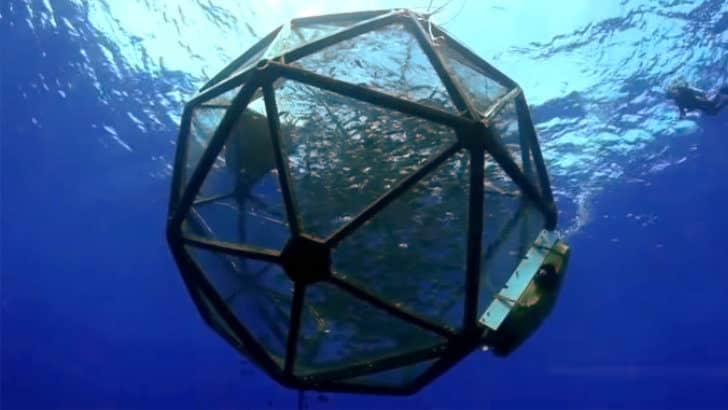
Sustainable deepwater fish farms could propel the fishing industry into a new direction and in an “environmentally responsible manner” by replenishing depleted wild stocks that have been affected by overfishing and pollution.
Marine biologist Neil Sims is helping to spearhead this initiative with Hawaii-based Ocean Era (formerly Kampachi Farms), a start-up that’s established offshore.
Ocean Era breeds “sushi-grade fish” in pens 230 feet and almost 4 miles (70 meters deep, 6 km) from the coast. Currently, aquaculture (the farming of fish, seafood and aquatic plants) already accounts for about half the fish eaten worldwide. However, these fish farms are typically located in coastal waters where the fecal waste produced by the fish, and chemicals used in the farming process potentially impacts the environment.
— Read on www.techthatmatters.com/these-sustainable-deepwater-fish-farms-breed-sushi-grade-fish-and-could-replenish-depleted-wild-stocks/
Meet Nemesis, one of the many endangered great hammerhead sharks that spends her winters in Bimini, The Bahamas. This interactive 3D project was a close collaboration between Angela Rosenberg, President of ANGARI Foundation and Captain of R/V ANGARI, Duncan Irschick, Professor at UMass Amherst and Director of Digital Life with CG artist Jeremy Bot and Casey Sapp, CEO of VRTUL.
Footage was collected during R/V ANGARI’s Expedition 33 in Bimini with Casey Sapp’s custom underwater multi-camera system to collect views of Nemesis swimming from all angles. The videos provided Digital Life modelers with the necessary imagery and data to create a high resolution and accurate animated 3D model.
The completed interactive 3D shark model is part of Digital Life’s “ark” of living organisms, which serves as an invaluable resource for educators, scientists and conservationists.
This work would not have been possible without the financial and field support of several donors.


 Sustainable deepwater fish farms could propel the fishing industry into a new direction and in an “environmentally responsible manner” by replenishing depleted wild stocks that have been affected by overfishing and pollution.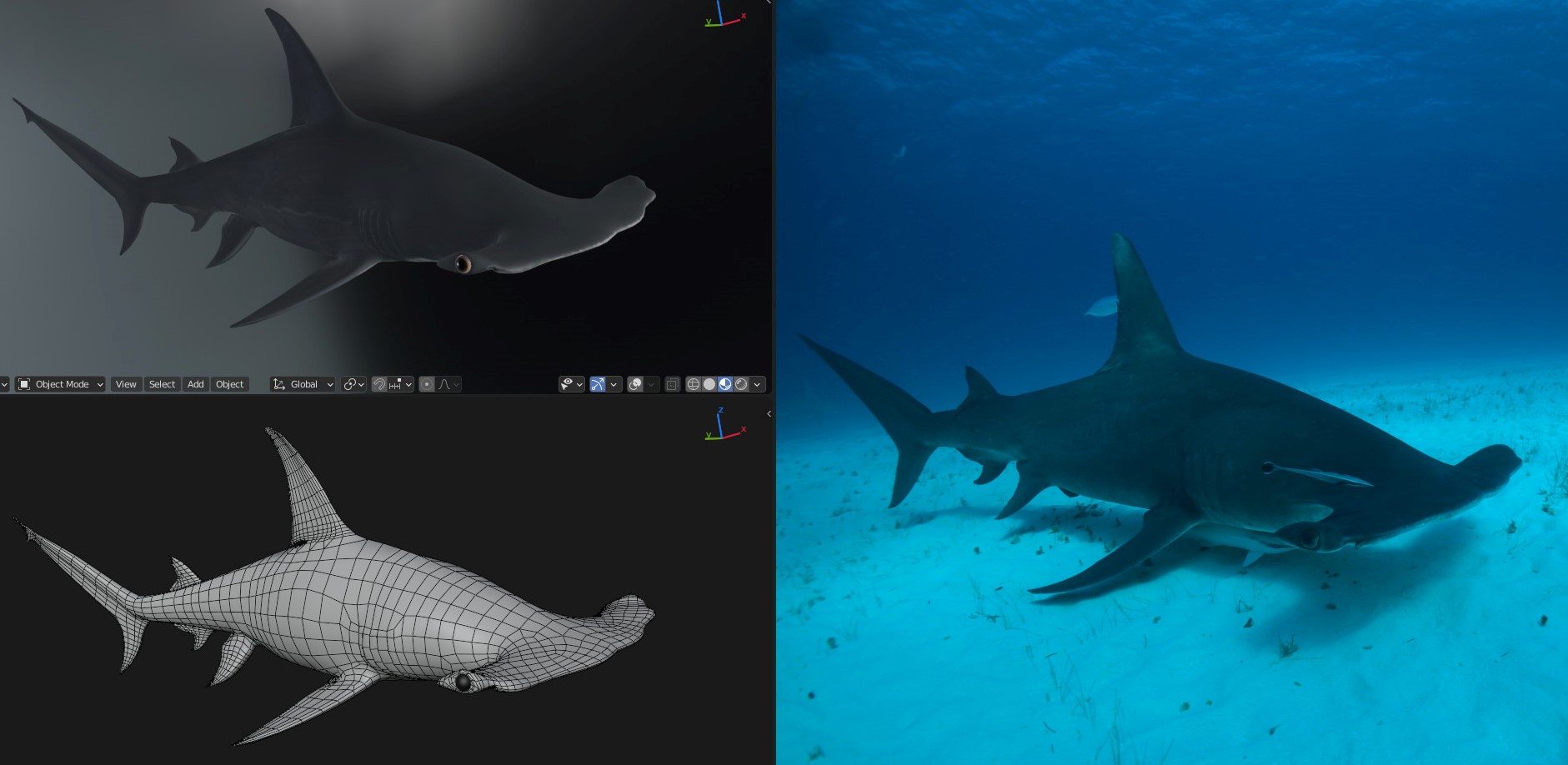
 Brownie Bytes