
Category Archives: Speaking

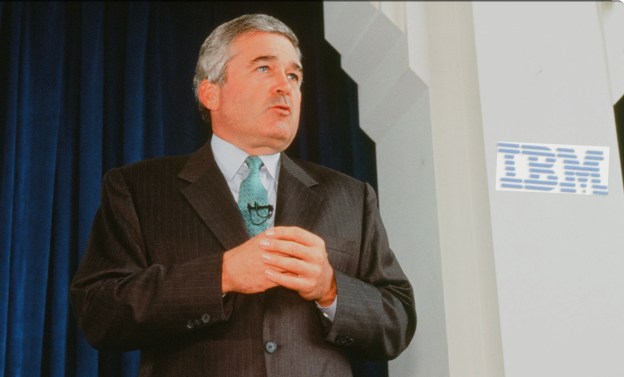
Lou Gerstner, former CEO at IBM

Lou Gerstner, the Hard-Nosed Outsider Who Taught IBM’s “Elephant” To Dance Again, Died Saturday, December 27, at 83

By R. Michael Brown, Journalist | Feature Story Writer | Multimedia Producer | Former IBMer

When Lou Gerstner arrived in April 1993, IBM was bleeding cash and confidence.

Competitors chipped away at IBM’s legacy strongholds. Analysts openly questioned whether “Big Blue” should be broken up. Internal divisions were siloed and slow.

Gerstner had just led RJR Nabisco. His résumé also included McKinsey and American Express. He became IBM’s first CEO hired from outside the company.

As an IBMer, I shared the frustration with constant internal politics and a lack of customer focus.

Gerstner’s early message was famously blunt: “Execution matters more than lofty vision,” he said.

He rejected a plan to break IBM into smaller “Baby Blues,” betting instead that customers still needed a single integrator capable of delivering end-to-end solutions.

That decision reshaped IBM’s future and helped push the company toward services and enterprise transformation—moves widely credited with reversing one of the most dramatic corporate declines in American business history.

Gerstner’s tenure was not sentimental. He ended long-standing cultural practices, including IBM’s “no layoff” tradition, and he demanded accountability at every level. Yet the results were hard to argue with.

He restored profitability, simplified IBM’s structure, and repositioned the company for the networked economy that would soon dominate global business.

Multimedia Explosion and the Beginning of the Web

For many inside IBM, his leadership style could feel relentless—but it also felt clarifying. Few saw that transformation more closely than I did.

He saw my early multimedia productions—new technology at the time—and recognized their value. He understood that the world’s leading computer company could use multimedia to deliver his messages more powerfully.

Introducing Ultimedia – Multimedia for the Personal Computer and Web. NY Film Festival Award Winner. Producer R. Michael Brown

He gave me the opportunity to contribute and I’m grateful he did. I served as one of Gerstner’s speechwriters and his multimedia producer. Prior to Gerstner arriving, I pioneered IBM’s early multimedia and Internet communication efforts. That work helped redefine how executives communicated at scale in the digital era.

Gerstner would call me and tell me that he “needed some Disney” for his presentation. He wasn’t big on what he called “chitchat” but was open to my ideas for the content we produced. We talked about the future of the web…

See More [RMichaelBrown.com]

Be Strong… not a victim

Who was Lurch?

Aggregated by R. Michael Brown, Writer, AI Editor

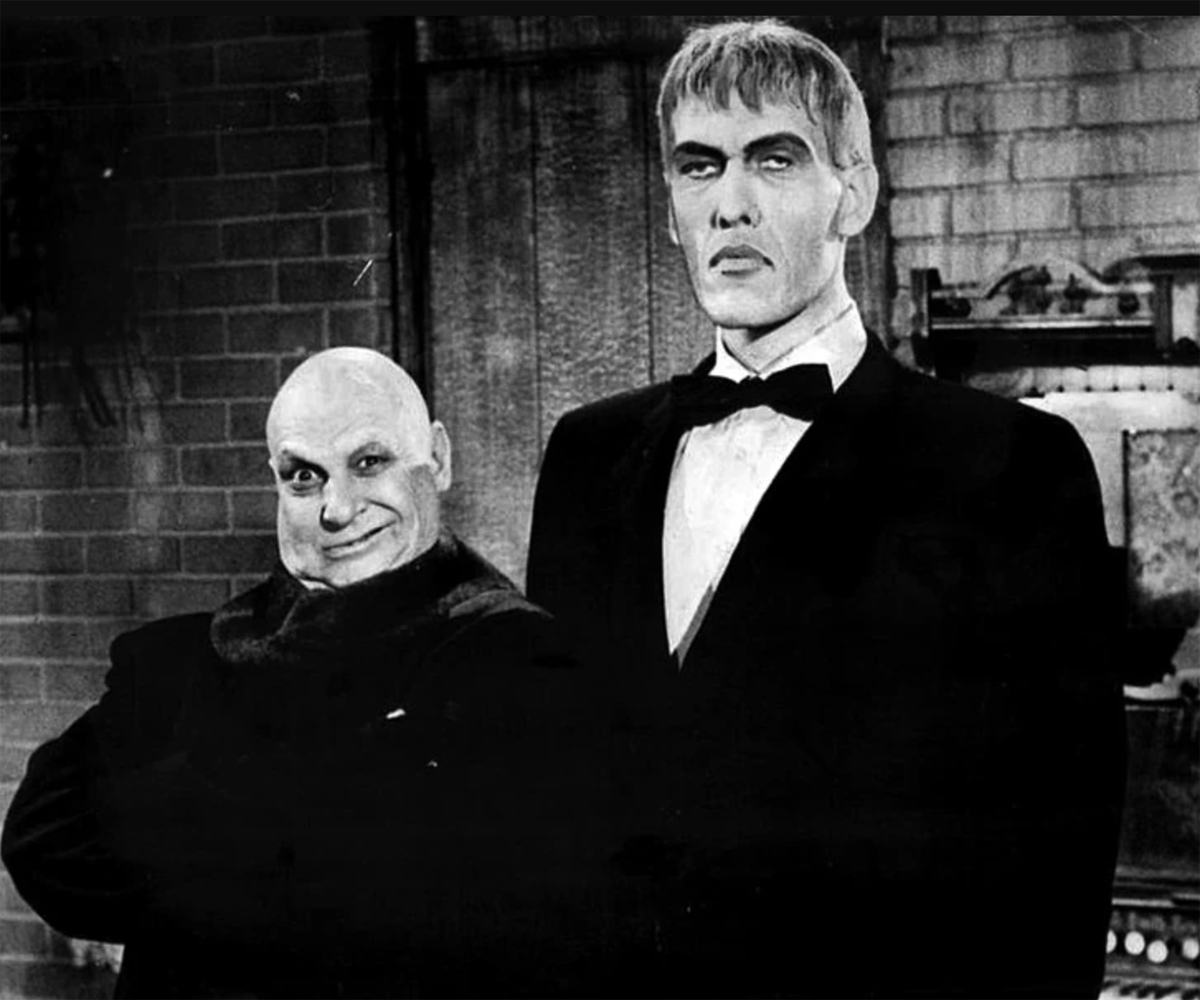
Uncle Festus and Lurch from the Addams Family TV show

Lurch was a fictional character created by American cartoonist Charles Addams as a butler to the Addams Family. In the original television series, Lurch was played by Ted Cassidy.

He is a 6 ft. 9 in. tall, shambling, gloomy butler. In the original Addams Family television series, Lurch has a deep and resonant voice. Although fully capable of normal speech, Lurch often communicates via simple inarticulate moans, which, much like the dialogue of Cousin Itt, his employers have no trouble understanding.

Like any butler, Lurch tries to help around the house, but occasionally his great size and strength cause trouble. He clearly takes pride in his work and is willing to do even the most arduous task.

His character often demonstrates signs of frustration towards his employers; however, his continued presence also suggests loyalty. As a result, he appears to be one of the family.

The family summons him with an ever-present bell pull (in the form of a hangman’s noose). When pulled, it produces a loud gong noise that shakes the house, to which Lurch instantly appears and responds, “You… rang?”, even if wide-angle shots reveal that he was clearly nowhere in the vicinity before; on a few occasions Lurch arrives even before the bell pull is tugged.

Much of Lurch’s history, including his first name and the nature of his relationship to any other Addamses, was originally unspecified. “Lurch” was revealed during the original TV series to be a surname, as there was a “Mother Lurch” who appeared in one episode (portrayed by Ellen Corby). She addressed Lurch as “Sonny”, which could either be a parental nickname or his actual first name. As for his father, he was mentioned twice, once in the second animated series, and in an apparent reference to his Frankenstein’s monster-like appearance, Lurch said, smiling, “He put me together.” And another time in the original series where Lurch mentions his father wanted him to be a jockey (typically short and light people) instead of a butler.

It was stated in Addams Family Reunion that Lurch is part Addams. This plays into his being a creation similar to Frankenstein’s monster. The only definite body part that is from an Addams is his heart. Lurch’s mother appears to be a physically normal, elderly woman, although she does not see anything unusual about the Addams family or their home, with the exception of Thing.

“Lurch” as a Florida ocean lifeguard in Ormond Beach

A decade before Ted Cassidy played Lurch on The Addams Family (and appeared in Star Trek, The Twilight Zone, Butch Cassidy and the Sundance Kid and other films and series) he was an Ormond Beach lifeguard who earned a double major in Speech and Drama at DeLand’s Stetson University. That’s him, second from left. Handsome fella and, by all accounts, a very nice man.

Theodore Crawford Cassidy (July 31, 1932 – January 16, 1979) was an American actor. He tended to play unusual characters in offbeat or science-fiction works, such as Star Trek and I Dream of Jeannie, and he played Lurch on The Addams Family TV series of the mid-1960s.[1][2] He also narrated the intro sequence for the 1977 live-action The Incredible Hulk TV series and provided the growls and roars for the Hulk for the first two seasons before his death. [Wikipedia]

Why You Don’t Like A Recording of Your Own Voice

Speaker Rébecca Kleinberger. Researcher from MIT Media Lab

Your voice is indistinguishable from how other people see you, but your relationship with it is far from obvious.

Rébecca Kleinberger studies how we use and understand our voices and the voices of others. She explains why you may not like the sound of your own voice on recordings and the extraordinary things you communicate without being aware of it.

The Emotional Power of Stories

Long before the Internet, cable, telephone…

www.instagram.com/tv/CTFzkqtHwv0/

Dog Learns To Communicate By Using Buttons And Tells Her Owner She’s ‘Mad’ – Digg

Stella uses an AAC device to tell her owner what she’s feeling and she talks about as well as you’d think a dog could talk.

— Read on digg.com/video/dog-learns-to-communicate-by-using-buttons-and-tells-her-owner-shes-mad

Help for Free. Your Brand Will Expand

‪#Video is a major player in social media – produce useful industry #news [FOR #FREE] to attract attention to your #brand. ‬