The Gospel According to Peter Thiel

Michael Gibson still remembers his first day working for Peter Thiel. Like many of Thiel’s hires, he’d met the contrarian investor through several of the PayPal founder’s variously eccentric political ventures. A onetime self-described “unemployed writer in L.A.,” who’d left a doctoral program in philosophy at Oxford, Gibson had met Thiel through his work at the Seasteading Institute, a Thiel-funded attempt to create a libertarian “floating city” in international waters. Then Thiel asked him to help teach a class at Stanford Law School on philosophy, technology, and politics. And then Thiel asked him to work for his hedge fund. Gibson had no intention of working in finance, or any experience in doing so, but he and Thiel had, he felt, “gelled philosophically,”
— Read on www.city-journal.org/peter-thiel

Solving online events — Benedict Evans

Events are a bundle of content, networking and meetings, and aggregate
people in one place at one time. When you try to take this online, half of
it breaks and most of it makes no sense bundled together. We need new tools
and new ways to think about networks, not ‘virtual conferences’.
— Read on www.ben-evans.com/benedictevans/2020/6/4/solving-online-events

The Biggest Psychological Experiment in History Is Running Now – Scientific American

The impact of ­COVID-19 on the physical health of the world’s citizens is extraordinary. By mid-May there were upward of four million cases spread across more than 180 countries. The pandemic’s effect on mental health could be even more far-reaching. At one point roughly one third of the planet’s population was under orders to stay home. That means 2.6 billion people–more than were alive during World War II–were experiencing the emotional and financial reverberations of this new coronavirus. “[The lockdown] is arguably the largest psychological experiment ever conducted,” wrote health psychologist Elke Van Hoof of Free University of Brussels-VUB in Belgium. The results of this unwitting experiment are only beginning to be calculated.

The science of resilience, which investigates how people weather adversity, offers some clues. A resilient individual, wrote Harvard University psychiatrist George Vaillant, resembles a twig with a fresh, green living core. “When twisted out of shape, such a twig bends, but it does not break; instead it springs back and continues growing.” The metaphor describes a surprising number of people: As many as two thirds of individuals recover from difficult experiences without prolonged psychological effects, even when they have lived through events such as violent crime or being a prisoner of war. Some even go on to grow and learn from what happened to them. But the other third suffers real psychological distress–some people for a few months, others for years.

— Read on www.scientificamerican.com/interactive/the-biggest-psychological-experiment-in-history-is-running-now/

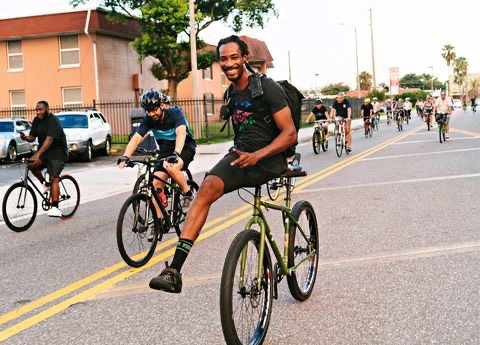
He Lost His Leg, Then Rediscovered the Bicycle. Now He’s Unstoppable.

Leo Rodgers is in flight. He’s bouncing and sliding in soft sand along an abandoned railway line that runs north from downtown St. Petersburg. As we zigzag past castaway boxcars plastered with graffiti and the agitated guests at a dog kennel, Rodgers hucks his bike off every huckable curb.

Many people who ride a lot know what it’s like to sit on the wheel of someone like Leo Rodgers—someone you can trust to pick a good line and call out obstacles and do his or her share of the work and probably drop your ass if they wanted to. Someone who emanates delight. Someone who sits on a bike like that’s where they belong, their upper body still and relaxed as the miles click by.

https://www.bicycling.com/culture/a32346213/leo-rodgers-amputee-cyclist/?utm_source=digg

Why Sleep Deprivation Kills | Quanta Magazine

Going without sleep for too long kills animals but scientists haven’t known why. Newly published work suggests that the answer lies in an unexpected part of the body.
— Read on www.quantamagazine.org/why-sleep-deprivation-kills-20200604/

#TeamNoSleep

Researcher Provides Helpful Guide to Coping with Stressful Times

news.ucmerced.edu/news/2020/researcher-provides-helpful-guide-coping-stressful-times-part-i

Adapt Your Marketing Strategy for COVID-19

From Gartner:

In a crisis situation subject to rapid change, CMOs need a proactive plan to adjust and adapt how they lead their teams, speak to their customers, and manage their brands.

Customers may never know how a company’s finance or HR department responds to a major unpredicted event, but marketing sits center stage, its moves reflected in every ad campaign, message and channel. You set the tone for how customers perceive the brand during a difficult time.

Taking the right actions and finding the right message can be challenging, especially in a fast-changing situation. All companies should operate with integrity and trust even as they come under pressure from a swiftly evolving situation. Those with a product or service well-suited for difficult times must, meanwhile, tread lightly, lest customers think they’re exploiting tragedy. 
“Long before the coronavirus emerged, consumer trust in both government and large brands had eroded.”
“Among marketing’s greatest challenges is foreseeing how customer wants, needs, expectations and purchasing decisions will evolve,” says Augie Ray, VP Analyst, Gartner. “Customers themselves won’t know until COVID-19 infections, fears and restrictions occur in their workplaces, locales and lives.”

Marketers shouldn’t wait for problems to develop or the market to point in a clear direction before making plans and taking action. Instead, follow a four-step action plan to define scenarios, monitor customers and plan for marketing changes.
— Read on www.gartner.com/en/marketing/insights/articles/adapt-the-marketing-strategy-for-covid-19