
Tag Archives: technology

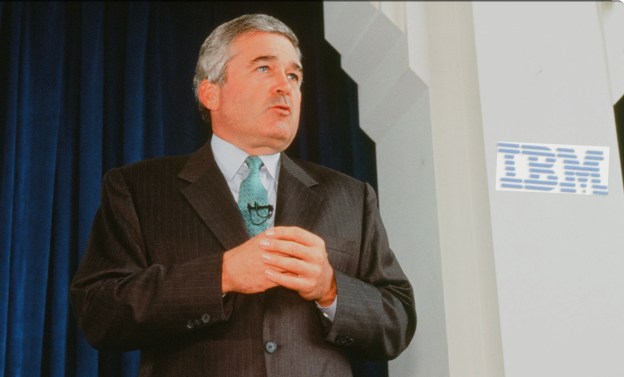
Lou Gerstner, former CEO at IBM

Lou Gerstner, the Hard-Nosed Outsider Who Taught IBM’s “Elephant” To Dance Again, Died Saturday, December 27, at 83

By R. Michael Brown, Journalist | Feature Story Writer | Multimedia Producer | Former IBMer

When Lou Gerstner arrived in April 1993, IBM was bleeding cash and confidence.

Competitors chipped away at IBM’s legacy strongholds. Analysts openly questioned whether “Big Blue” should be broken up. Internal divisions were siloed and slow.

Gerstner had just led RJR Nabisco. His résumé also included McKinsey and American Express. He became IBM’s first CEO hired from outside the company.

As an IBMer, I shared the frustration with constant internal politics and a lack of customer focus.

Gerstner’s early message was famously blunt: “Execution matters more than lofty vision,” he said.

He rejected a plan to break IBM into smaller “Baby Blues,” betting instead that customers still needed a single integrator capable of delivering end-to-end solutions.

That decision reshaped IBM’s future and helped push the company toward services and enterprise transformation—moves widely credited with reversing one of the most dramatic corporate declines in American business history.

Gerstner’s tenure was not sentimental. He ended long-standing cultural practices, including IBM’s “no layoff” tradition, and he demanded accountability at every level. Yet the results were hard to argue with.

He restored profitability, simplified IBM’s structure, and repositioned the company for the networked economy that would soon dominate global business.

Multimedia Explosion and the Beginning of the Web

For many inside IBM, his leadership style could feel relentless—but it also felt clarifying. Few saw that transformation more closely than I did.

He saw my early multimedia productions—new technology at the time—and recognized their value. He understood that the world’s leading computer company could use multimedia to deliver his messages more powerfully.

Introducing Ultimedia – Multimedia for the Personal Computer and Web. NY Film Festival Award Winner. Producer R. Michael Brown

He gave me the opportunity to contribute and I’m grateful he did. I served as one of Gerstner’s speechwriters and his multimedia producer. Prior to Gerstner arriving, I pioneered IBM’s early multimedia and Internet communication efforts. That work helped redefine how executives communicated at scale in the digital era.

Gerstner would call me and tell me that he “needed some Disney” for his presentation. He wasn’t big on what he called “chitchat” but was open to my ideas for the content we produced. We talked about the future of the web…

See More [RMichaelBrown.com]

Driverless Cars Can Be Jerks Too

So when your driverless car cuts someone off, will the road rage be directed at you… the passenger?

 Today’s top story, from reporter Anabelle Nicoud, IBM Think Newsletter

If you’ve ridden in a Waymo recently and found your driverless taxi to be more assertive and, dare we say, more human on the road, you’re not imagining things. The Alphabet-owned company, which has been navigating passengers in San Francisco, Austin, Phoenix and LA, is now exhibiting very human-like traits, according to the San Francisco Chronicle. No drunk driving or road rage, of course, but under the right circumstances, that white Jaguar might indulge in a honk or two. As it turns out, a more commanding Waymo yielded safer rides, the Chronicle reported. “Being an assertive driver means that you’re more predictable, that you blend into the environment, that you do things that you expect other humans on the road to do,” David Margines, Waymo’s Director of Product Management, said in an interview with the paper. “It’s a very interesting kind of paradox here: we need less perfection to really fit social norms,” said Kaoutar El Maghraoui, a Principal Research Scientist at IBM, in this week’s Mixture of Experts. According to the company’s data, Waymo is safer than human drivers. And yet, part of being so might just be by mimicking our bad, albeit predictable, habits, favoring social compatibility over algorithmic perfection. Uncanny valley, you say? Technically, Waymos could be enjoying more free-form decision-making, thinks Gabe Goodhart, Chief Architect of AI Open Innovation at IBM. He likened older, rule-based vehicles to the chatbots of yore—pre-generative AI systems beholden to clunky decision trees. But as autonomous vehicles adopt more human-like behavior—and choice—drivers may feel more comfortable because the cars better adhere to their expectations. “If we start applying this more flexible way of adapting [the car’s] behavior to the environment … it may make the vehicle fit in a whole lot better,” he said on the podcast. As more driverless cars hit the streets of American cities—from Zoox to Tesla’s newly launched robotaxis—it will be fascinating to watch how they adapt to robot driving. Could it pave the way to more collaboration between tech giants? “A lot of open-source consortiums have started because of similar problems,” noted Ann Funai, CIO and VP of Business Platform Transformation at IBM. “There’s this area where you need common understanding, common knowledge, common engagement. Maybe that means agreeing to use the same open-source component for training, so we’re not all crashing into each other.” Listen to the full episode on YouTubeSpotify and Apple Podcasts.