
Category Archives: Tech

Mike on failed Disney lake wave

Failed Disney World Wave Machine from Early 1970’s

By R. Michael Brown, Writer| Producer & Former Field Engineer

In the lake in front of the Polynesian Hotel and Village, Disney World built a wave machine on an island to pump waves toward the hotel beach for surfing.

The company I worked for was doing some geotechnical work on it and I was the only surfer in the company so they sent me out to test the waves.

When the machine worked, which wasn’t very often, it would pump out a 2 foot closeout of murky swamp water.

Me [my skinny self back then] OR Dick Nunis, Disney executive?

There is only one photo that I’ve found of someone surfing the wave (above). A Disney employee newsletter ran the photo and said it was Dick Nunis surfing in the photo, the Disney executive that came up with the wave machine idea and acquired the $400,000 budget to build it. Might have been him but the newsletter also said it was a 5 ft. wave. That’s a stretch LOL.
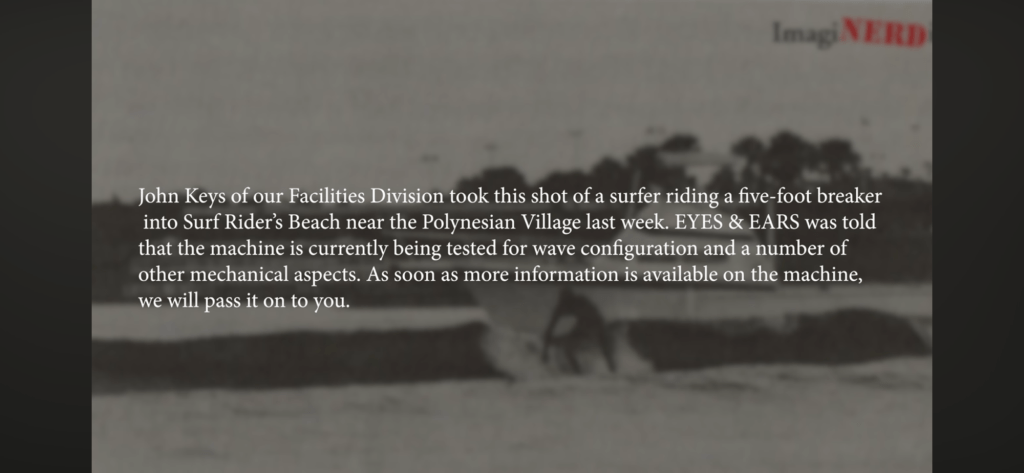
5 ft. Wave?

It wasn’t a very powerful wave but it was strong enough to ride on a longboard AND wash away the man-made fine white sand beach next to the Polynesian.

I told them they should try to use larger/heavier grain size quartz beach sand; but, that’s tan and gray and they wanted pristine white – I’m sure for the Disney attraction brand or something. Powdery white sand only comes in tiny grain sizes and is easily moved by wind and waves. Erosion was instantaneous. Common sense really.

I was just an ocean engineering college student, employed field soils engineer, and surfer, so what did I know, right? They didn’t listen or try it.

It failed.

So the ride/attraction was cancelled and scrapped.

Nunis did finally get his wave machine with Typhoon Lagoon in 1989 – But that’s another story…

Typhoon Lagoon

Watch the Latest Update from the Neuralink Team

https://platform.twitter.com/widgets.js
  • Neuralink has successfully implanted brain-computer interfaces in 7 human participants (4 with spinal cord injuries, 3 with ALS)
  • Participants are using the devices an average of 50 hours per week, with some exceeding 100 hours weekly
  • The device enables control of computers, phones, and gaming systems purely through thought
  • First participant broke the BCI world record for cursor control on day one, surpassing decades of prior research

    Product Roadmap Near-term (2025-2028)
  •   2025: Speech decoding capability – directly converting thoughts to words
  •   2026: First “Blindsight” participant – restoring vision to blind individuals; tripling electrode count to 3,000
  •   2027: Multiple implants per person; increasing to 10,000 channels
  •   2028: 25,000+ channels per implant; treating psychiatric conditions and pain

    Most Impactful Applications
  1.   Digital Independence: Paralyzed users can work full-time jobs, communicate, and control devices independently
  2.   Robotic Control: Users can control robotic arms and hands, with plans to enable full control of Tesla Optimus robots
  3.   Vision Restoration: Blindsight will initially provide low-resolution vision, eventually surpassing human capabilities (infrared, ultraviolet, radar)
  4.   Body Reanimation: Future capability to bridge damaged neurons, potentially allowing paralyzed individuals to walk again

Driverless Cars Can Be Jerks Too

So when your driverless car cuts someone off, will the road rage be directed at you… the passenger?

 Today’s top story, from reporter Anabelle Nicoud, IBM Think Newsletter

If you’ve ridden in a Waymo recently and found your driverless taxi to be more assertive and, dare we say, more human on the road, you’re not imagining things. The Alphabet-owned company, which has been navigating passengers in San Francisco, Austin, Phoenix and LA, is now exhibiting very human-like traits, according to the San Francisco Chronicle. No drunk driving or road rage, of course, but under the right circumstances, that white Jaguar might indulge in a honk or two. As it turns out, a more commanding Waymo yielded safer rides, the Chronicle reported. “Being an assertive driver means that you’re more predictable, that you blend into the environment, that you do things that you expect other humans on the road to do,” David Margines, Waymo’s Director of Product Management, said in an interview with the paper. “It’s a very interesting kind of paradox here: we need less perfection to really fit social norms,” said Kaoutar El Maghraoui, a Principal Research Scientist at IBM, in this week’s Mixture of Experts. According to the company’s data, Waymo is safer than human drivers. And yet, part of being so might just be by mimicking our bad, albeit predictable, habits, favoring social compatibility over algorithmic perfection. Uncanny valley, you say? Technically, Waymos could be enjoying more free-form decision-making, thinks Gabe Goodhart, Chief Architect of AI Open Innovation at IBM. He likened older, rule-based vehicles to the chatbots of yore—pre-generative AI systems beholden to clunky decision trees. But as autonomous vehicles adopt more human-like behavior—and choice—drivers may feel more comfortable because the cars better adhere to their expectations. “If we start applying this more flexible way of adapting [the car’s] behavior to the environment … it may make the vehicle fit in a whole lot better,” he said on the podcast. As more driverless cars hit the streets of American cities—from Zoox to Tesla’s newly launched robotaxis—it will be fascinating to watch how they adapt to robot driving. Could it pave the way to more collaboration between tech giants? “A lot of open-source consortiums have started because of similar problems,” noted Ann Funai, CIO and VP of Business Platform Transformation at IBM. “There’s this area where you need common understanding, common knowledge, common engagement. Maybe that means agreeing to use the same open-source component for training, so we’re not all crashing into each other.” Listen to the full episode on YouTubeSpotify and Apple Podcasts.

Brownie Bytes Has a Substack Newsletter Now!

Made You Look Brownie Bytes Newsletter Masthead
Brownie Bytes Made You Look Newsletter Masthead

Stay up-to-date

You won’t have to worry about missing anything. Every new edition of the newsletter goes directly to your inbox.

See our latest post:

Join the crew

Be part of a community of people who share your interests.

Check Us Out! [Browniebytes.Substack.com]

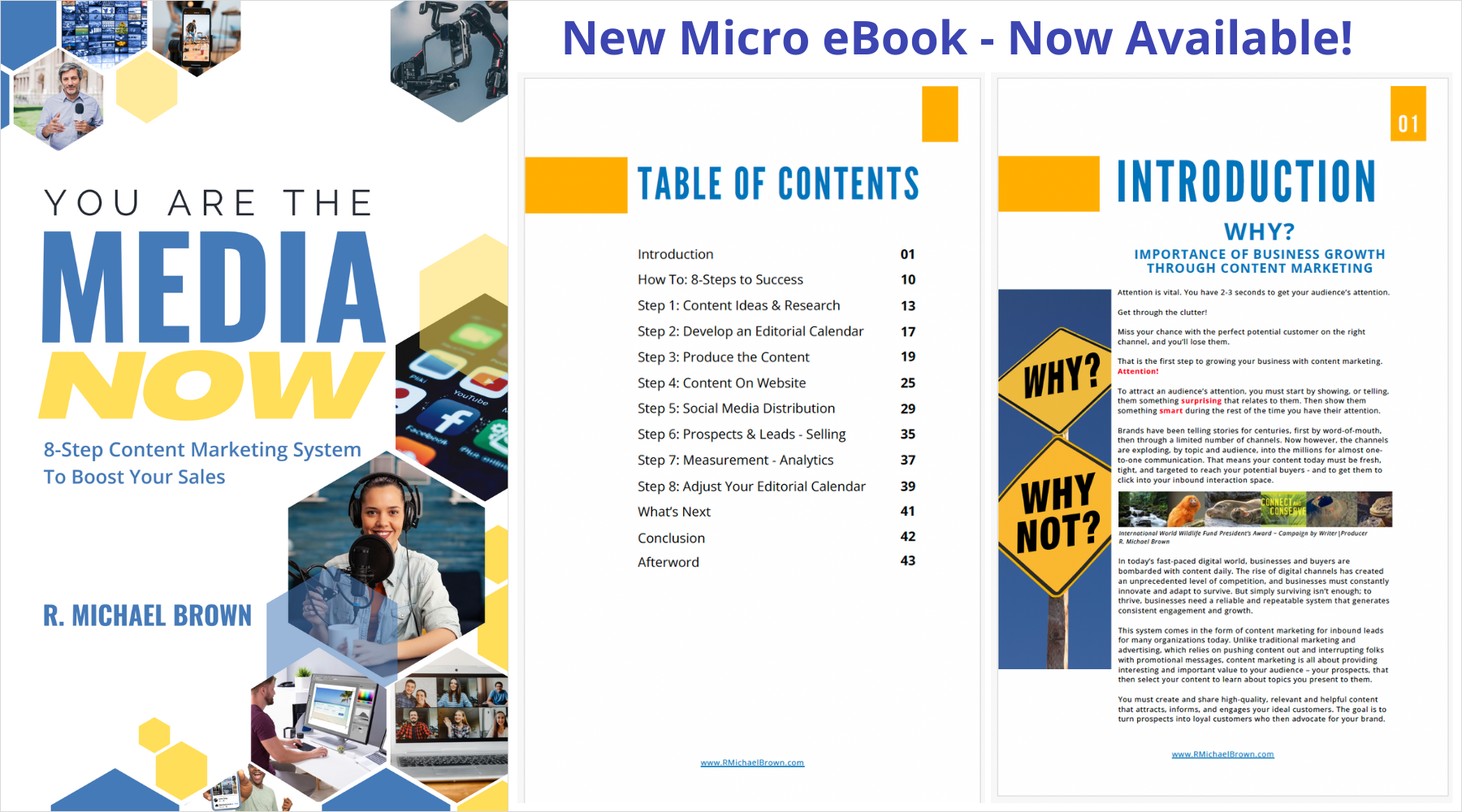
New eBook – You Are the Media Now: 8-Step Content Marketing System to Boost Sales

New eBook - You Are the Media Now: 8-Step Content Marketing System to Boost Sales

Run a Business? Be the Media!

This micro eBook doesn’t just teach marketing; it hands you the blueprint to out-news the press, out-market your competitors, and become an industry thought leader — no matter your size.

In 8-Steps you’ll get it. Only $3.

Learn More [RMichaelBrown.com]

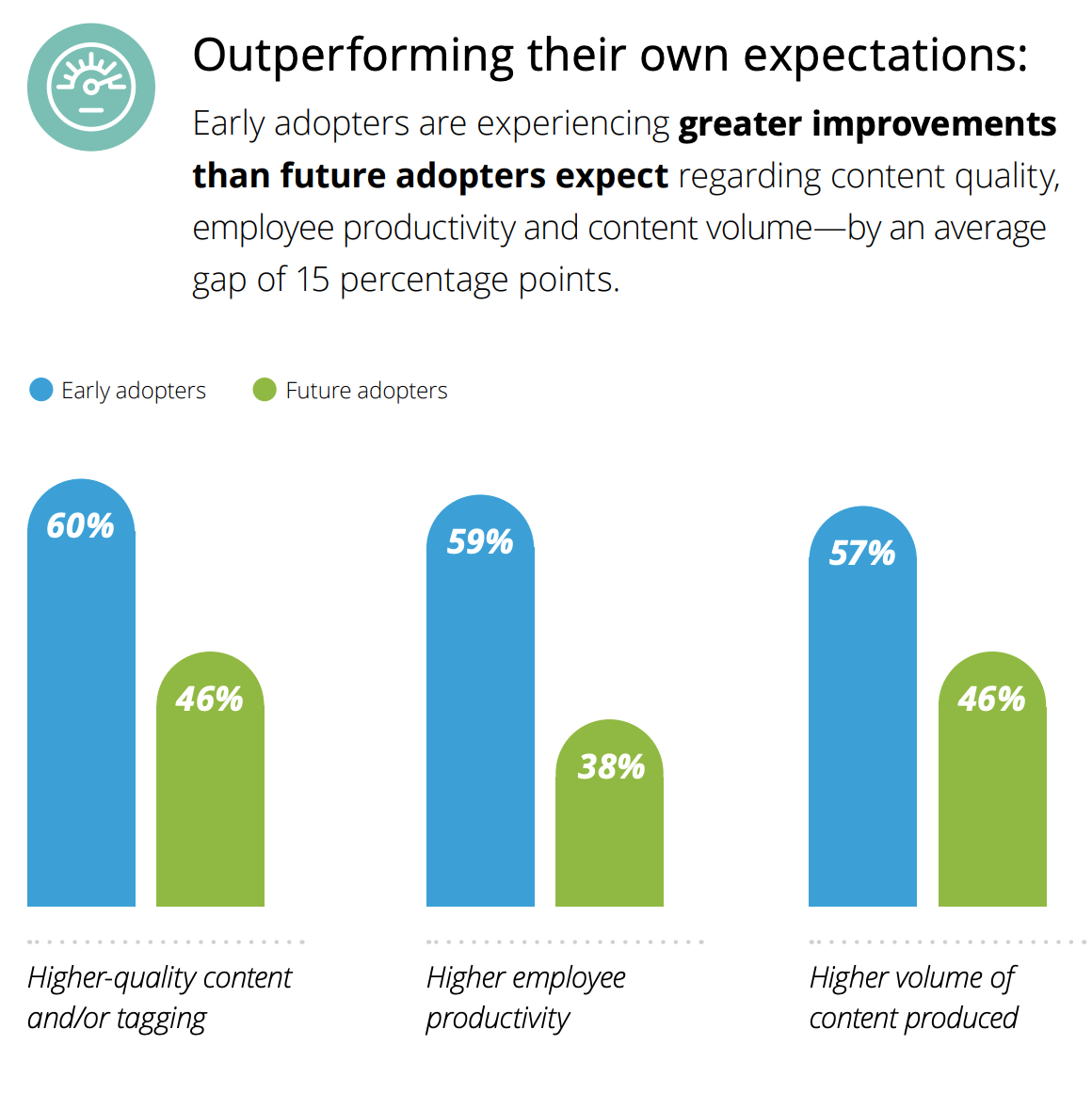
Gen AI Powers Content Marketing Advantage for Early Adopters

Deloitte Digital’s new research on Generative Artificial Intelligence (Gen AI) in marketing content production reveals that Gen AI is already reshaping content production giving brands an advantage.

See the research that should compel you to collaborate with a forward leaning Gen AI content marketer.

See More [R. Michael Brown Marketing & Communications Consulting]

@SpaceX Falcon Heavy Launch Last Night 12-28-2023

Leonor and I watched and recorded from our dock on Lake Huntley in Lake Placid, Florida. Partly cloudy night but still exciting!

Turn the sound on and listen to Leonor’s commentary!

Way to go @elonmusk!

#SpaceX

#FalconHeavy

#space