Your mobile device reception is getting worse. In an era where smartphones, and Internet of Things (IoT) devices, are extensions of our daily lives, the invisible infrastructure supporting their connectivity—cellphone spectrum—is facing a critical shortage. The exponential growth in wireless devices and our insatiable demand for faster, more reliable connections has led to a scarcity of available spectrum. This shortage has important implications for the future of telecommunications.
To understand why there’s no more cellphone spectrum available, we must examine the complexities of spectrum allocation, usage, and the challenges faced by the telecommunications industry. But first, see the results of a J.D. Power user report completed this year.
On average, between April and June of 2023, U.S. cellphone users reported that out of every 100 times they tried to use data, text, or make a call, they had problems 11 times. That’s up from about nine problems per 100 connections in most of 2020 and 2021.
Reason: Demand Explosion – Finite Spectrum – The Future….
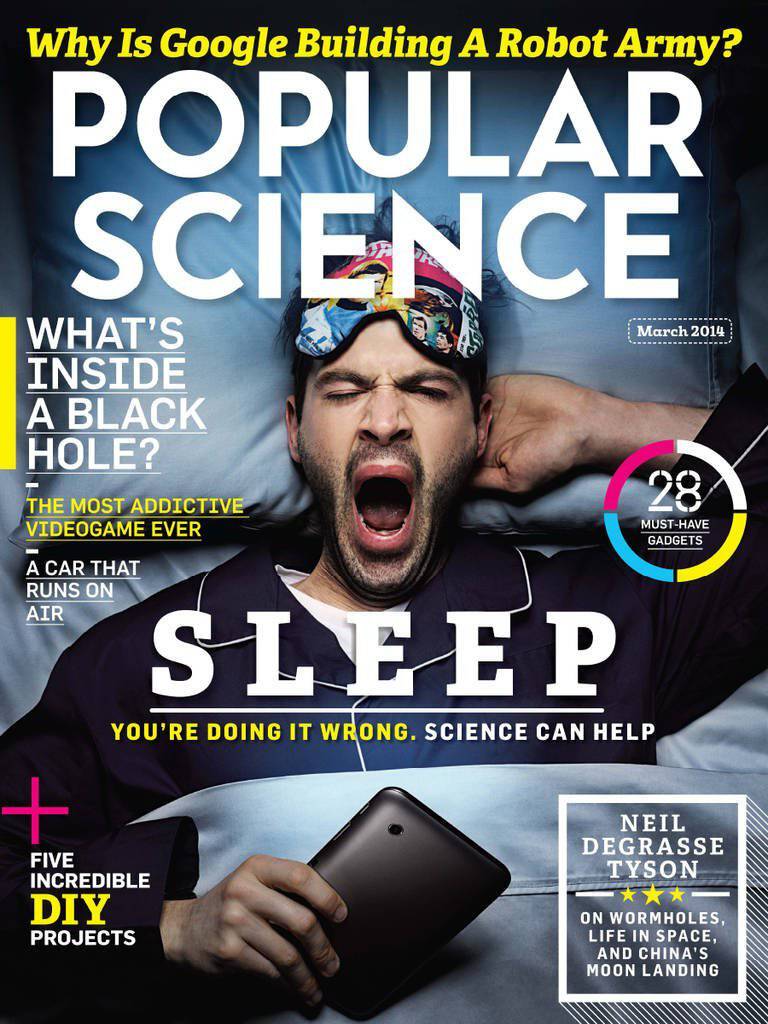
Popular Science, the magazine that popularized many wonky subjects for readers, publishing such authors as Charles Darwin in its 151 years, is no more.
The periodical has stopped publishing its online magazine, its print edition having been halted three years ago.
I was a subscriber and reader throughout my younger years. It spurred my interest in science and technology and encouraged me to become a professional writer that focuses on simple and interesting explanations and how science and technology impacts folks in everyday life. It’s a sad day. A spokesperson said that the market has changed to video. It’s what I’ve been telling organizations for years: If you’re not in the video and broadcasting business, you’ll be left behind. – R. Michael Brown
Her fans think they found true love — but she’s not real.
Milla Sofia is an artificial intelligence-generated influencer whose sultry photos on Twitter and TikTok are racking up thousands of likes from deluded social media users, Futurism reported.
“[I’m a] 19-year-old virtual girl from Helsinki Finland. I was made by AI. Check my other social media accounts from the link below,” reads the Twitter bio on Sofia’s account.
Sofia, who goes by @AiModelMilla on her verified Twitter account, is certifiably fake, yet her 7,790 followers can’t help but drool over bikini photos of her in Greece.
“Still in Santorini, and I’m ‘Greek’-ing out over how to leave this paradise!” reads a punny tweet from July 19 with over 35,000 views and 2,000 likes.
‘Wow, look at you, so stunningly beautiful with a gorgeous smile,” writes one Twitter user.
I’m a marketing pro on a mission to become an authority on Artificial Intelligence (AI) so I can use the tech to help clients with faster and improved marketing and business – with better results.
I’m looking forward to us doing this together. Nobody can do it alone. Here’s what I’ve found up to this point.
From predictive analytics and machine learning algorithms to natural language processing and chatbots, and visual creation systems, I’ve been searching to understand how these innovations can enhance customer experiences and drive results.
How I’m Using this New AI Knowledge
As I learn these complex AI concepts and skills, I’m working on crafting them into simple, actionable insights and projects for my clients.
Most importantly, I’m trying it out. Learning by doing is the only way with new tech.
I’m experimenting with AI-driven software for marketing content and campaigns, including:
An AI video generator called Synthesia. Still a bit robot-like but amazing that it can do it.
Learning prompting on ChatGPT (OpenAI) and Bard (Google) to generate more ideas.
Creating realistic images and art from a description in natural language with DALL-E.
Using SoundDraw to generate custom music for use in video.
Multiplying video content with Vidyo.
Doing creative headline and keyword research to maximize SEO with VidIQ.
Business is getting tight! Here are the top 5 marketing and communications moves that your company should make for the rest of 2023 into 2024 to crush your competition during this slowdown.
I’ve been up today since, you guessed it… 4:48 AM. Thank you Florida state government Emergency Response Team.
The governor is pissed. So am I and a lot of others throughout Florida because the alarm went out to every cellphone in the state.
But, I’ll bet the coffee companies are happy because of the millions of Floridians that couldn’t go back to sleep and just got up and got coffee. We’ll need some more between 2 and 3 PM this afternoon to stay awake beyond dinner.
Officials apologize after ‘Emergency Alert’ test sent in ‘error.’
Typically, only a few agencies have the ability to request and send out emergency notifications to cell phones, and they’re usually for imminent situations, such as severe weather warnings, an AMBER Alert for a missing child, public safety alerts, or a national emergency.
Hours later, the Florida Division of Emergency Management (FDEM) apologized for the incident in a tweet, and said the Emergency Alert System (EAS) notification was part of a monthly test, but that it was supposed to air on TV, not cell phones.
Florida Governor DeSantis’ press secretary @BryanDGRiffin says “party responsible” for 4:45 a.m. emergency alert will be fired, “This morning’s 4:45AM SERT test alert was not appropriate and not done at our direction. The party responsible will be held accountable and appropriately.”
Twitter is Lit Up
“ICYMI: Florida‘s got its feathers ruffled today because at 4:45am the EAS decided to send a TEST to our phones. All of our phones. All of them. We are grumpy.”
“To whoever decided to do a test of Florida’s Emergency Alert System at 4:45 a.m.: I hope you step on a Lego. Jerk.”
“On the night my sister’s six-month-old was actually sleeping through the night for the first time. She’s out for blood.”
“The only thing the state of Florida achieved with this 4:43am emergency alert test was helping people find out how to turn alerts off, probably at the expense of all other alerts including AMBER alerts.”
And Then… the Cool Huge Rocket Blew Up
SpaceX Starship launches
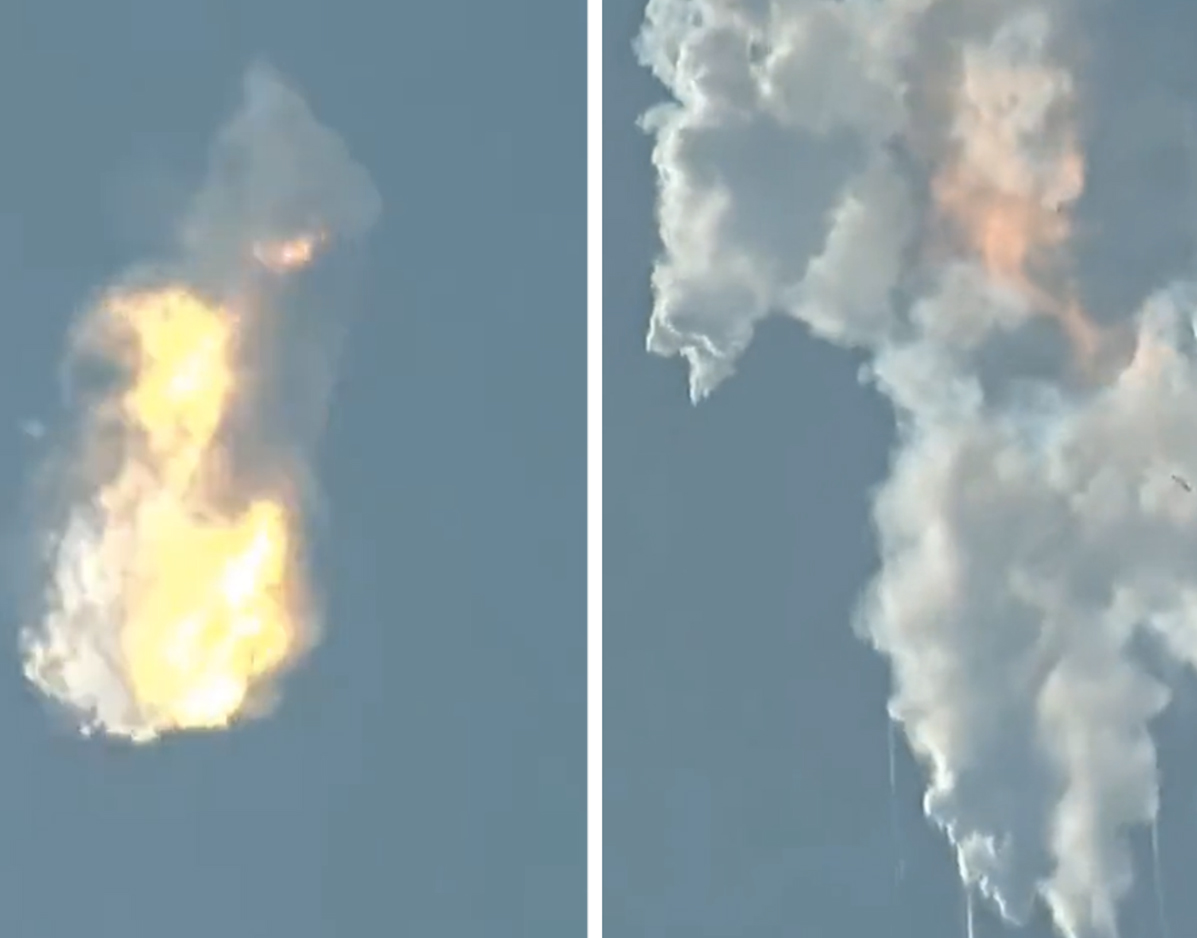
SpaceX Starship blows up at about a minute into the launch just as it tried to separate stages.
The giant rocket started to spin weirdly and wiggle, then… BOOM!
Geek wording for an explosion of SpaceX Starship today: “Starship experienced a rapid unscheduled disassembly before stage separation,” SpaceX said in a statement on Twitter.
Scammers are always finding new ways to dupe people out of money. In the U.S., phone calls remain the primary way swindlers hook older victims.
A study published last month by the Federal Trade Commission found that 24% of adults over age 60 who reported losing money to a scam in 2021 said it started with a phone call—the largest percentage of any method, including email, text and mail. For victims 80 and older, phone calls were behind 40% of scams.
Scams range from robocalls pitching car warranties to young people posing as grand-children in need of a bailout. The best way to protect against phone scams, online-safety experts say, is to not receive the phone calls in the first place.
So how do you do that?
While ignoring mystery calls is effective, it isn’t always feasi-ble. Perhaps you don’t have all the numbers of healthcare providers, insurance companies and other vital services stored in your phone’s contacts. Also, caller ID often doesn’t identify the name of the business that is calling. Tech companies are developing solutions for diverting scam calls. And even though the majority of Ameri-cans over 65 have smartphones, there are also ways to protect yourself if you’re on a landline.















 Brownie Bytes